Quality inspection is the structured process of checking a product, material, or service against specified requirements to confirm it meets agreed quality standards. You use it to stop defects, verify compliance, and keep your supply chain predictable—especially when suppliers, processes, and materials vary across regions and production lines. In this guide, you’ll learn why inspection matters in supply chain management, how it connects QMS and PLM, which standards govern inspections (including AQL sampling), and how inspection differs from QC and QA. You’ll also see the main inspection types—from pre-production to container loading supervision—plus real-world applications in manufacturing and regulated industries like medical devices. We’ll cover inspection checklists, digital inspection systems, statistical sampling, and modern upgrades like AI-driven visual inspection.
If you source parts globally, consider working with professional 3D part auditors who bring years of on-site experience. The right auditors help both manufacturers and buyers qualify trustworthy suppliers worldwide, reduce disputes, and keep inspection data consistent across locations.
What is quality inspection?
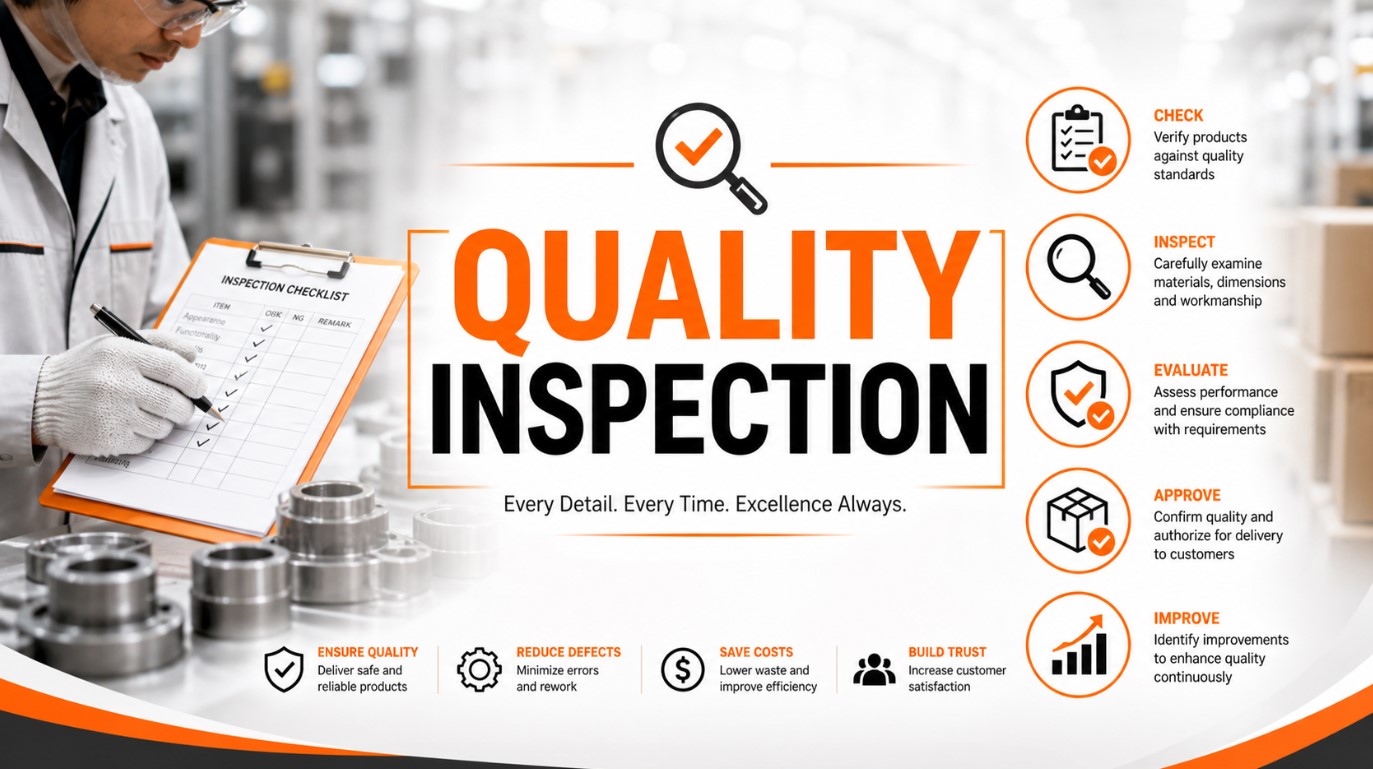
Quality inspection is a verification activity that measures or examines defined characteristics of an item and compares results to documented requirements. The input is a product, material, or process output plus its specification (drawings, tolerances, test methods, defect criteria). The inspection uses tools and test procedures to collect evidence—measurements, observations, photos, or functional results. The output is a pass/fail decision, a defect classification, and an inspection record that supports disposition (accept, rework, reject, quarantine).
In this article’s context, inspection is the practical “proof step” that connects raw materials to product quality, and inspection data to continuous improvement.
Why is quality inspection critical in supply chain management?
Quality inspection is critical in supply chain management because it is the fastest way to confirm that incoming materials, in-process work, and finished products match the same specification—no matter which supplier or factory produced them. Without inspection, a small variation in raw materials or a packaging mistake can travel through your production process and become an expensive customer issue.
Inspection also creates a shared language for buyers and suppliers. When defect categories, sampling plans, and acceptance criteria are written clearly, you reduce arguments and speed up containment. You can quarantine nonconforming lots, prevent mixing good and bad stock, and protect delivery schedules. Over time, inspection results reveal supplier risk patterns, recurring quality issues, and where process capability is weak, so you can tighten controls where they matter most.
How does ongoing quality inspection enable continuous improvement?
Ongoing quality inspection enables continuous improvement because it turns daily production inspection results into trend data you can act on. Instead of treating defects as isolated events, you track defect rates by severity, identify repeated failure modes, and link them to process steps, equipment condition, or supplier batches.
With consistent inspection criteria, you can run root-cause analysis and close the loop through corrective and preventive actions (CAPA). For example, a spike in dimensional variation can trigger a targeted gauge study, a tooling adjustment, or updated work instructions. If cosmetic defects rise only on night shifts, you can investigate training, lighting, or handling. The key is cadence: frequent, comparable inspection data lets you verify whether changes actually reduce defects, scrap, and rework.
How do QMS and PLM connect through quality inspection?
QMS and PLM connect through quality inspection because inspection records are the proof that product requirements were met—and that proof must stay linked to design intent, revisions, and change control. PLM defines what “good” looks like (drawings, specs, tolerances, approved materials), while QMS governs how you verify it (inspection plans, nonconformance workflows, approvals, audit trails).
When inspection is integrated, you reduce confusion caused by outdated specifications and unmanaged revisions. You also gain traceability: who inspected what, using which method, at what time, against which revision level. That traceability supports audits and speeds up problem solving when a customer complaint or supplier dispute appears.
How does inspection integrate with QMS and PLM processes?
Inspection integration means you connect specification control to execution and outcomes. In practice, PLM is the source of controlled requirements (BOM, drawings, tolerances, test methods), while QMS manages inspection plans, sampling logic, and the nonconformance/CAPA pipeline.
Typical touchpoints include:
- Specifications and revisions: inspection plans pull the correct revision and update when an engineering change order (ECO) is approved.
- Change control governance: deviations and waivers are recorded and approved before shipment release.
- Nonconformance and CAPA: failed results automatically create NCRs, route approvals, and track corrective actions.
- Data flow and access: inspection results, photos, and measurements feed dashboards for quality managers and product engineers.
How can PLM leverage inspection data across the product lifecycle?
PLM leverages inspection data by using real defect evidence to improve requirements, manufacturability, and supplier decisions. If inspection reports show frequent edge burrs, PLM can drive a design-for-manufacture update: change edge-break callouts, adjust surface finish requirements, or update tooling notes.
Across lifecycle stages, inspection trend data helps you:
- qualify and re-qualify suppliers based on consistent performance,
- refine DFM/DFA guidance using real process variation,
- update defect criteria and test limits when risk changes, and
- capture end-of-life learnings (returns and field failures) to influence next-generation product design.
A simple example: repeated label failures in final inspection can trigger a PLM requirement update for adhesive type, label placement, or packaging method.
Which standards and regulations apply to quality inspections?
Standards and regulations apply to quality inspections because they define what you must document, how you demonstrate compliance, and how you prove traceability across the manufacturing process. For general quality management, ISO 9001 sets expectations for controlled processes, records, and continual improvement. For sampling-based acceptance, ISO 2859 and ANSI/ASQ Z1.4 define AQL-oriented sampling plans, inspection levels, and accept/reject rules.
Industry frameworks add tighter rules: IATF 16949 raises control requirements for automotive supply chains, while AS9102 formalizes first article inspection (FAI) expectations in aerospace. In medical and regulated production, you’ll often align inspections with GMP, ISO 13485, FDA QSR, and EU MDR expectations, including device history records, traceability, and validated test methods. Test execution may rely on IEC/ASTM method standards where applicable.
How does quality inspection differ from quality control (QC) and quality assurance (QA)?
Quality inspection checks whether outputs meet requirements, QC manages ongoing conformity in production, and QA builds systems that prevent defects before they happen. Inspection is evidence-based verification at defined points (incoming, in-process, final). QC uses inspection plus controls like SPC, process adjustments, and containment. QA is broader: it sets policies, training, audits, and governance so quality standards are met by design.
Inspection answers, “Does this lot meet the specified requirements?” QC answers, “Are we keeping the process under control today?” QA answers, “Have we built a management system that consistently produces high quality?”
| Aspect | Quality Inspection | Quality Control (QC) | Quality Assurance (QA) |
| Primary goal | Verify conformity | Maintain process output within standards | Prevent defects through systems |
| Timing | Checkpoints | Continuous during production | Before and during operations |
| Focus | Product/lot evidence | Process + product results | Policies, planning, governance |
| Outputs | Pass/fail, defect records | Adjustments, containment, release decisions | Audits, training, system improvements |
| Tools | Checklists, gauges, tests | SPC, control plans, NCR workflow | QMS processes, audits, CAPA oversight |
Why is quality inspection important in manufacturing operations?
Quality inspection is important in manufacturing operations because it protects yield and prevents defective parts from turning into scrap, rework, returns, or recalls. When you confirm dimensions, appearance, functionality, and packaging/label integrity early, you avoid stacking costs later. Many organizations find the “cost of poor quality” can reach double-digit percentages of revenue, so catching issues before shipment is a direct financial control—not just a quality exercise.
Inspection also supports compliance and customer satisfaction. If you ship nonconforming finished products, you risk chargebacks, line stoppages at your customer, and long-term brand damage. When inspection is consistent, you can stabilize production output, tighten takt time planning, and make supplier performance measurable instead of anecdotal.
How does automating nonconformance, equipment, and inspection management save time and costs?
Automation saves time and costs because it reduces manual handoffs and prevents missed actions in NCR/CAPA, calibration, and inspection scheduling. Digital NCR workflows route issues to the right owner, enforce approvals, and track closure dates. Equipment maintenance and calibration scheduling reduces measurement drift, which protects your data validity and reduces false rejects or escaped defects.
When automated data capture replaces paper, you reduce re-typing errors, speed up lot disposition, and improve “real-time” visibility. You can also quantify impact: shorter inspection lead time, faster audit findings closure, fewer repeat nonconformances, and lower rework hours per production run.
What are the main types of quality inspection?
Quality inspection types are structured checkpoints that verify or validate product quality across the supply chain. The timing usually follows incoming → in-process → final, with specialized inspections added for risk mitigation, complex parts, or regulated industries. Verification-focused inspections confirm current lots meet acceptance criteria, while validation-style inspections (like first article) prove the process can meet requirements consistently.
Below are the main types you’ll see in an inspection program:
- Pre-production inspection (PPI)
- In-process inspection (DUPRO/DPI)
- Final random / pre-shipment inspection (FRI/PSI)
- Container loading/unloading supervision (LS)
- Piece-by-piece inspection (100%)
- Incoming/receiving inspection
- Source/on-site supplier inspection
- First article inspection (FAI)
- Returned material inspection (RMI)
- Stocked re-inspections
- Field inspections
- Equipment inspections
Pre-production inspection (PPI)
Pre-production inspection is an early checkpoint that confirms materials, tooling, and setup readiness before full production begins. It fits your quality inspection process as a prevention step: you catch mismatched raw materials or incorrect setup before you produce large quantities.
Common PPI checks include:
- verifying material specs and certificates (COA/COC)
- confirming tooling, fixtures, and gauges are ready
- reviewing approved samples and workmanship standards
- checking process steps, packaging requirements, and labeling rules
Use PPI when you’re onboarding a new supplier, launching a new product design, or changing a critical manufacturing process.
In-process inspection (DUPRO/DPI)
In-process inspection checks parts during production so you can contain defects before they spread across the production line. Many teams schedule it early-to-mid build—often when roughly 10% to 50% of units are completed—so adjustments still protect most of the lot.
Typical DUPRO/DPI actions include:
- sampling builds using defined inspection levels
- verifying key dimensions and functional criteria
- tying results to SPC signals (trend, shift, out-of-control)
- feeding findings back to operators for immediate correction
This approach supports process capability by finding variation early, not after packaging.
Final random (pre-shipment) inspection (FRI/PSI)
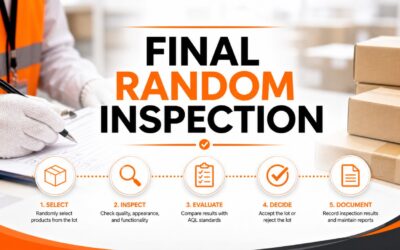
Final random inspection is a lot-based acceptance decision made on finished products before shipment release. It usually uses random sampling with AQL-based acceptance criteria. Many programs run PSI when most units are completed and packed, often around an 80% packed threshold, so the sample represents what you will actually ship.
Common PSI checks include:
- appearance, workmanship, and labeling compliance
- dimensional verification against tolerances
- functional tests aligned to the specification
- pack count, assortment, cartons, and shipping marks
If the lot fails, you stop shipment, isolate defects, and trigger corrective action.
Container loading/unloading supervision (LS)
Loading supervision verifies quantity, handling, and packaging integrity during container loading or unloading. It supports chain-of-custody evidence, especially when you ship internationally and want proof that the right goods were loaded correctly.
Key LS activities include:
- verifying SKU counts against packing lists
- checking carton condition and stacking methods
- confirming container condition (clean, dry, undamaged)
- documenting seal numbers, photos, and timestamps
LS reduces disputes about missing units, damaged cartons, or swapped products after dispatch.
Piece-by-piece inspection
Piece-by-piece inspection is a 100% check where every unit is inspected against pass/fail criteria. You use it when risk is high: safety-critical products, low process capability, or high-value items where a single defect is unacceptable.
A practical piece-by-piece approach includes:
- defining critical-to-quality features and defect categories
- using standardized gauges and clear visual limits
- controlling takt time impact (extra labor or automation)
- documenting traceability, sometimes with a pass label or seal
It increases cost and time, so you reserve it for the right scenarios.
Incoming/receiving inspection
Incoming inspection checks raw materials and purchased parts at receipt before they enter the manufacturing process. It prevents bad inputs from contaminating your inventory and protects downstream yield.
Incoming inspection commonly includes:
- COA/COC verification and documentation review
- sampling by supplier risk level and part criticality
- quarantine and disposition rules (accept, rework, reject)
- labeling and traceability checks for lot control
It becomes more important when suppliers change processes or when you have frequent quality issues on specific materials.
Source/on-site supplier inspection
Source inspection is performed at the supplier site to verify parts before shipment, often at defined witness points. It’s valuable when your supply chain is complex, the part is difficult to inspect after assembly, or shipping delays make rework expensive.
Typical source inspection elements:
- build-at-source checks against drawings and specs
- witness/testing points for critical operations
- verification of special processes and records
- early nonconformance identification and containment
You reduce surprises at receiving and shorten response time when issues appear.
First article inspection (FAI)
First article inspection verifies the first produced unit(s) against drawings and specifications to confirm the process can meet requirements. In aerospace contexts, AS9102 provides a structured format for documenting the results and linking them to design characteristics.
FAI often covers:
- full dimensional layout against tolerances
- functional checks and required test evidence
- material and process verification (certs, special processes)
- documented traceability to revision level and tooling
Run FAI on new parts, new tools, major ECOs, or when restarting production after long pauses.
Returned material inspection (RMI)
Returned material inspection evaluates returned items (often through an RMA process) before they re-enter inventory or trigger corrective action. It connects customer feedback to internal quality management.
RMI typically includes:
- verifying failure symptoms and defect classification
- documenting condition, packaging damage, or misuse indicators
- linking the issue to NCR/CAPA and supplier accountability
- feeding findings back to design and production teams
RMI is most useful when you want evidence-based root cause, not guesswork.
Stocked re-inspections
Stocked re-inspections are periodic checks on inventory because quality can change over time. Shelf-life limits, storage environment, and material aging can turn “good at receipt” into “bad at use.”
Common triggers and actions:
- time-based re-qualification schedules
- environmental or storage risk checks (humidity, temperature)
- packaging integrity review for sensitive components
- lot segregation and disposition if results fail
This reduces the risk of using degraded materials in your production process.
Field inspections
Field inspections are performed on installed products to verify condition, safety, and compliance during service life. They help you capture real-world performance data and improve reliability.
Field inspection may include:
- safety compliance checks and functional verification
- documentation of wear, damage, or installation errors
- mobile data capture with photos and timestamps
- feedback loops to service procedures and design changes
This is especially relevant for industrial equipment and regulated installations.
Equipment inspections
Equipment inspections verify that production and inspection equipment remains accurate, safe, and fit for use. If tools drift out of calibration, your inspection data becomes unreliable and your quality standards lose meaning.
Equipment inspection programs usually include:
- preventive maintenance schedules and checklists
- calibration planning and records retention
- gauge control and measurement system validity
- triggers for out-of-tolerance response and containment
Good equipment control protects both product quality and audit readiness.
What are the applications of quality inspection?
Quality inspection is used in manufacturing, supplier management, logistics, regulated industries, and field service to keep product quality consistent. Below are 9 applications ordered from the most common to more specialized use cases.
- Incoming raw materials verification: confirms materials match specifications before production starts.
- In-line production process control: detects deviations early to reduce scrap and rework.
- Final product release decisions: determines if finished products ship or are held.
- Supplier qualification and performance tracking: compares suppliers using the same defect criteria and KPIs.
- Packaging and labeling verification: prevents compliance issues and customer complaints tied to mislabeling.
- Warehouse and inventory quality checks: manages shelf-life risk and lot traceability.
- Customer returns analysis (RMA/RMI): links failures to NCR/CAPA and supplier accountability.
- Field service inspections: validates installed performance and safety in real conditions.
- Regulated documentation support: builds audit-ready records for medical, aerospace, and automotive contexts.
How is quality inspection applied in a medical setting?
Quality inspection in a medical setting is applied to prove device safety and compliance while maintaining full traceability from components to finished devices. Under GMP and ISO 13485 expectations, you tie inspection activities to controlled documents like DMR/DHR, verify device classification needs, and maintain records retention suitable for audits.
You typically inspect incoming components with lot traceability, verify critical-to-quality dimensions and functional checks during builds, and confirm sterile barrier and package integrity before release. If results fail, you initiate NCR/CAPA and document containment and disposition. Because risk is patient-facing, acceptance criteria, labeling, and change control must be strict and consistently executed.
How has quality inspection evolved in manufacturing?
Quality inspection evolved because manual checks alone could not keep up with higher volume, tighter tolerances, and more complex manufacturing processes. Early approaches relied on visual inspection and hand measurements. Over time, organizations adopted SPC to monitor variation and target inspections based on process signals instead of intuition.
Later milestones include automated measurement tools, coordinate measuring machines (CMM), and machine vision systems that evaluate surfaces at speed. Today, AI-driven visual inspection can classify defects using trained models, while IIoT data supports predictive analytics and earlier containment. The direction is clear: more standardized data, faster decisions, and fewer paper bottlenecks.
What are the requirements for QA inspections?
QA inspections require controlled criteria, competent inspectors, validated tools, and traceable records so inspection results are consistent and audit-ready. You are not just “checking parts”—you are proving that your quality management system produces reliable decisions.
Core requirements include:
- Documented inspection criteria: drawings, tolerances, defect categories, sampling plans, and acceptance rules.
- Trained personnel: role-based training plus periodic competence checks.
- Calibrated instruments: calibration schedules, out-of-tolerance response, and gauge control.
- Traceability: lot IDs, revision linkage, and clear product genealogy.
- Records retention: secure storage, controlled access, and searchable history.
- Escalation paths: defined actions for rejects, quarantine, NCR initiation, and CAPA routing.
Why is an inspection checklist important?
An inspection checklist is important because it enforces consistency across inspectors, factories, and shifts. When your checklist lists the exact characteristics, tolerances, tools, and pass/fail criteria, you reduce subjective judgment and prevent missed checks.
A checklist also improves auditability. It creates a repeatable record of what was inspected, when it was inspected, and who approved disposition. If you work with multiple suppliers, standardized checklists help you compare inspection outcomes fairly and resolve disputes faster, because everyone is working from the same documented requirements.
How can digital inspection systems replace paper-based checklists?
Digital inspection systems replace paper because they capture inspection data in a structured format that is faster to complete, easier to analyze, and harder to falsify. Mobile forms guide inspectors through the right sequence, prevent skipped fields, and standardize defect categories across products and suppliers.
A strong digital setup includes e-signatures, photo evidence, automated timestamps, and revision control so you always inspect against the correct specification. Interoperability matters too: when inspection results connect to QMS, you can trigger NCR/CAPA automatically and route approvals without email chains. When data connects to PLM, you keep design requirements aligned with real inspection outcomes. The practical result is less re-typing, fewer errors, and more “real time” visibility.
How do inspections, audits, and lab tests differ?
Inspections verify conformity of products or processes at a defined time, audits evaluate whether systems and controls meet standards, and lab tests generate specialized evidence using controlled methods and equipment. You use inspection to accept or reject lots, audits to assess capability and compliance, and lab tests to validate safety, chemistry, or performance beyond routine factory checks.
| Aspect | Inspection | Audit | Lab Test |
| Primary purpose | Conformity check | System/process compliance | Technical verification |
| Output | Pass/fail + defects | Findings + corrective actions | Test report + measured results |
| Where done | Factory, receiving, field | Supplier site or internal org | Accredited or specialized labs |
| Typical trigger | Shipment release, incoming lots | Qualification, periodic review | Regulatory, safety, validation |
| Evidence type | Measurements, photos, checklists | Procedures, records, interviews | Method-based measurements |
Why is the AQL sampling method used in quality inspections?
AQL sampling is used because it balances detection power and inspection cost when 100% inspection is impractical. With AQL, you define acceptable defect limits by severity and use standardized sampling plans to decide whether a lot passes or fails. That gives you a repeatable decision method for high-volume production and multi-supplier sourcing.
In practice, you select an AQL level, an inspection level, and a sampling plan that sets sample size and acceptance/rejection numbers. Buyers often prefer tighter AQL for critical features because the risk of escaped defects is higher. Suppliers may prefer looser levels because tighter sampling increases rejection risk and rework costs. The right choice depends on product risk, customer requirements, and the true cost of nonconformance.
What quality control methods support inspection activities?
Quality control methods support inspection because they reduce variation and prevent defects, while inspection verifies results. Used together, you get both control and proof.
Common supporting methods include:
- Failure testing
- Statistical control (SPC)
- Total quality management (TQM)
- 100% inspection (selective use)
- Taguchi method
Failure testing
Failure testing is a stress-to-fail approach that reveals weak points in materials, design, or assembly. In practice, teams use HALT/HASS concepts to accelerate stress and observe failure modes. Inspectors reference failure test outcomes to refine acceptance criteria, identify critical characteristics, and determine which features need tighter inspection or stronger process controls.
Statistical control (SPC)
SPC is the use of control charts and capability indices to monitor process variation over time. When Cp/Cpk trends drop or charts show out-of-control signals, you trigger targeted inspections on the affected dimensions or operations. This is how inspection becomes smarter: you inspect more where risk rises, and you avoid wasting effort where the process is stable.
Total quality management (TQM)
TQM is an organization-wide approach that treats quality as everyone’s responsibility, not only the quality inspectors’ job. It embeds inspection into standard work, training, and cross-functional problem solving. In TQM environments, inspection results are not “blame reports”; they are inputs used to improve processes, update work instructions, and strengthen supplier relationships.
100% inspection
100% inspection is the method of checking every unit, typically reserved for safety-critical parts or when process capability is low. It can reduce escapes, but it also increases takt time and can introduce human error if the method is manual. Many operations improve 100% inspection with fixtures, go/no-go gauges, or automated vision to keep throughput acceptable.
Taguchi method
The Taguchi method uses robust design principles and orthogonal arrays to find parameter settings that reduce variation. When you optimize process parameters for stability, inspection finds fewer borderline results and fewer surprises across shifts or suppliers. Taguchi thinking also helps you focus inspection on the parameters and interactions that truly drive quality, not just what is easy to measure.
Should you use traditional or modern approaches to quality inspection?
Traditional inspection relies on manual checks and paper records, while modern inspection uses digital workflows, integrated systems, and automation to improve consistency and speed. If your supply chain is small and stable, traditional methods may be enough. If you manage multiple suppliers, tight tolerances, or regulated documentation, modern approaches reduce risk and support traceability.
| Factor | Traditional approach | Modern approach |
| Data capture | Paper, manual entry | Mobile forms, automated capture |
| Consistency | Inspector-dependent | Standardized workflows + rules |
| Traceability | Harder to search | Audit trails + revision linkage |
| Speed | Slower disposition | Faster routing and approvals |
| Analytics | Limited | Dashboards, trend detection |
What are the key components of a modern quality control system?
A modern quality control system works because it connects inspection execution to decisions and improvement actions. You typically combine digital checklists, MES/QMS integration, automated data capture, SPC monitoring, measurement system analysis (MSA), CAPA workflows, and live dashboards.
That setup helps you standardize defect categories, prevent outdated specs from being used, and automate lot disposition. It also makes supplier comparisons fairer: you can compare defect rates, DPPM/PPM, and inspection lead times using the same definitions across locations.
What is the mechanism of AI-driven visual inspection?
AI-driven visual inspection is the use of machine vision plus trained models to classify defects from images or video. In this article’s context, it replaces subjective visual inspection with repeatable decisions at speed.
The mechanism usually follows: image acquisition → labeling → model training → inference → tuning → deployment → re-training. You collect representative images under controlled lighting, label defect classes, train a model, then run inference on new parts. You tune false positives and false negatives based on risk: for safety-critical defects you bias toward catching more. After deployment, you re-train using new defect examples and process changes to keep accuracy stable.
Yes—AI-enabled inspection can reduce escapes and inspection time when you have repeatable visuals and high volume. For example, a mid-volume manufacturer of consumer components faced recurring surface defect complaints that manual inspectors missed during peak shifts. The team installed fixed cameras at an in-line station, defined three defect classes, and trained a visual model using labeled images from prior rejects.
After deployment, the system flagged defects in real time and routed failed units to a quarantine bin with photo evidence attached to the NCR. Over eight weeks, the factory reported a 35% reduction in customer-return defects and cut manual visual inspection time per lot by about 25%. The biggest win was consistency: night-shift results matched day-shift results because the inspection logic no longer depended on who was watching.
How is statistical sampling used in quality inspection?
Statistical sampling is used because it gives you a controlled way to detect defects without inspecting every unit. You choose sample size and accept/reject thresholds based on risk, cost, and the probability of detecting nonconformance. That makes it especially useful for large lots, multiple SKUs, and fast production cycles.
Sampling works best when you classify defects (critical, major, minor), align sampling strictness to the real impact of failure, and keep methods consistent across suppliers. When combined with SPC, sampling becomes adaptive: stable processes can move to reduced inspection, while unstable signals trigger tightened plans. The goal is practical detection power without wasting effort where risk is low.
What are common sampling techniques and plans?
Sampling techniques include random, stratified, cluster, and acceptance sampling approaches, chosen to represent the lot fairly. Common inspection plans include single, double, and multiple sampling, plus normal/tightened/reduced rules depending on performance. Some teams use c=0 plans for high-risk attributes where any defect is unacceptable.
You choose based on lot size, defect risk, and cost of inspection versus cost of failure. The important part is governance: the plan must be documented, repeatable, and linked to disposition rules.
How do you integrate sampling with a QC system?
Integrating sampling with QC means sampling results drive actions, not just reports. You link sampling logic to defect classifications, SPC signals, and automated lot disposition. For example, an out-of-control SPC chart can switch a line from normal to tightened sampling. A failed sample can auto-trigger quarantine, NCR creation, and a containment action list for operators and suppliers.
When your QMS manages this routing, you reduce delays and ensure consistent decisions across shifts and sites.
How do you build a robust quality inspection program?
You build a robust quality inspection program by defining clear requirements, using risk-based inspection planning, assigning roles, and digitizing the workflows that must be repeatable. Start by deciding what you must protect: customer safety, compliance, delivery schedules, and brand reputation. Then align inspection frequency and depth to risk, not habit.
A strong program includes controlled specifications, defect criteria, calibrated tools, and a governance model for disposition and escalation. It also uses inspection data for continuous improvement: defect trends should lead to CAPA, supplier development, and design updates. Finally, when you scale globally, use standardized checklists and consistent sampling so inspection results remain comparable across the supply chain.
How do you develop an inspection plan?
You develop an inspection plan by defining requirements, selecting checkpoints, and linking outcomes to disposition and improvement actions. This how-to includes 6 steps.
- Define inspection scope and CTQs: identify critical-to-quality features, defect categories, and customer requirements.
- Select inspection points: decide where you will inspect (incoming, in-process, final, source, field).
- Choose sampling logic: set AQL or 100% rules based on risk, lot sizes, and past performance.
- Specify tools and methods: list gauges, test equipment, tolerances, and measurement instructions.
- Set disposition workflows: define accept/reject rules, quarantine, NCR initiation, and CAPA triggers.
- Control revisions and training: tie the plan to spec revisions and confirm inspector competence.
What training and certifications do quality inspectors need?
Quality inspectors need training that proves measurement competence, documentation discipline, and industry-specific knowledge. At a minimum, you want inspectors who understand drawings, tolerances, defect classification, and inspection reporting. For stronger capability, include MSA and Gage R&R training so measurement error is understood and controlled.
Common credentials include ASQ certifications like CQT/CQI, plus sector-specific training such as IPC standards for electronics. In regulated industries, inspectors also need documentation and traceability training that matches audit expectations, including how to handle deviations, waivers, and controlled records.
How do you run continuous improvement and audits around inspection?
You run continuous improvement and audits around inspection by reviewing defect trends, verifying compliance to standard work, and closing CAPA with measurable results. Layered process audits help you catch gaps at the operator, supervisor, and quality manager levels. Internal audits test whether records, calibration, and training remain current. External audits validate supplier controls and system maturity.
Use metrics that connect to action: repeat NCR rate, audit finding closure time, defect escape rate, and inspection lead time. When a CAPA closes, verify effectiveness with follow-up inspections and trend checks.
How to successfully manage quality and audits
You manage quality and audits successfully by planning evidence, controlling revisions, and making closure measurable. This how-to includes 5 steps.
- Build an audit-ready record system: controlled templates, clear ownership, and searchable storage.
- Standardize inspection execution: checklists, defect categories, and consistent sampling plans.
- Run scheduled internal audits: verify training, calibration, traceability, and change control.
- Close findings with CAPA discipline: root cause, corrective action, and effectiveness checks.
- Review management KPIs monthly: act on trends before they become customer complaints.
How do you prepare for a quality inspection effectively?
You prepare for a quality inspection by aligning requirements, organizing evidence, and making the inspection flow predictable. This how-to includes 6 steps.
- Confirm the latest specs and revisions: drawings, tolerances, and approved changes.
- Stage parts and lot traceability: labels, batch records, and quarantine status.
- Verify tool readiness: calibration status, gauge condition, and test setups.
- Pre-brief the checklist: critical features, defect criteria, sampling rules.
- Arrange access and safety controls: line access, PPE, and site rules.
- Plan disposition actions: rework stations, hold areas, NCR routing, and approvals.
Why is an inspection checklist important? (deep dive)
An inspection checklist is important because it acts as error-proofing for inspection itself. When you work fast, your risk is not only product defects—it’s missed inspection steps, mixed revision levels, and inconsistent defect calls. A checklist becomes standard work: it forces completeness and makes results comparable across inspectors.
It also creates an audit trail. With sign-offs, timestamps, and photo fields, you can prove what you checked and why you accepted or rejected. If a customer challenges a lot, the checklist gives you traceable evidence instead of memory-based explanations.
What should an inspection checklist include?
An inspection checklist should include the minimum information needed to produce repeatable pass/fail decisions. Core elements include item and specification IDs, revision level, sampling plan, measurement tools, tolerances, defect categories, and acceptance criteria.
You also want clear sign-offs: inspector name, date/time, and approval authority for disposition. Practical additions include photo fields for defects, links to work instructions, and prompts for packaging, labeling, and shipping marks where relevant. If you use digital checklists, add e-signature controls and automatic timestamps to protect record integrity.
What does a quality inspector do?
A quality inspector verifies that manufactured products meet specified requirements by measuring characteristics, documenting results, and initiating nonconformance actions when needed. You can expect inspectors to read drawings and quality standards, select the correct gauges, run visual and functional checks, and classify defects by severity.
They also play a coordination role. Inspectors communicate with operators about process issues, work with quality managers on NCR/CAPA, and coordinate with suppliers when incoming materials fail. Soft skills matter: clear reporting, calm escalation, and consistent decision-making reduce conflict. In global supply chains, inspectors often support supplier qualification by producing comparable inspection data that buyers can trust.
How should suppliers and buyers collaborate on quality inspection?
Suppliers and buyers collaborate best when they align on requirements, sampling rules, and dispute resolution before production begins. You should agree on quality standards, defect definitions, and which documents control acceptance (drawings, control plans, approved samples). For complex parts, use PPAP or FAI-style handoffs so the first run proves capability before volume ramps.
Data sharing should be structured. Share inspection reports, photos, and trend dashboards—not only pass/fail summaries. Define SLAs for response time on NCRs and for containment actions. If a lot fails, agree on who pays for sorting, rework, and re-inspection based on evidence and root cause. Strong supplier relationship management (SRM) turns inspection from a policing tool into a shared risk-control system.
How can you improve the quality inspection process?
You can improve the quality inspection process by tightening requirements, using risk-based sampling, digitizing evidence, and closing the loop with CAPA. This how-to includes 6 steps.
- Clarify acceptance criteria: remove ambiguity in defect categories and tolerances.
- Prioritize CTQs: focus inspection effort where failure is expensive or unsafe.
- Tune sampling to risk: adjust AQL and inspection levels using performance history.
- Upgrade measurement validity: strengthen calibration, MSA, and gauge control.
- Digitize records and routing: mobile checklists, photos, timestamps, automated NCR.
- Use trend reviews: monthly defect analysis tied to supplier actions and process changes.
What tools and software are required for quality inspection?
Quality inspection relies on a mix of measurement tools, testing equipment, and systems that manage inspection data. Your exact stack depends on tolerances, materials, and compliance needs, but the goal is the same: accurate measurement, consistent inspection criteria, and traceable records.
Common tools and software include:
- Calipers, micrometers, height gauges, bore gauges
- Go/no-go gauges, thread gauges, pin gauges
- Surface roughness testers, hardness testers
- Torque tools, force gauges, pressure and leak test rigs
- Electrical test equipment (continuity, resistance, insulation)
- CMM and 3D scanning (laser scanners) for tight tolerances
- Machine vision systems for automated visual inspection
- QMS software for inspection plans, NCR/CAPA, approvals, audit trails
- PLM for controlled specs, revisions, ECO workflows
- MES/ERP integration for lot tracking and disposition
How much does quality inspection cost?
Quality inspection cost depends on scope, speed, and where the work happens, but most services can be estimated using a Man Day model: one full day of inspection work by one qualified inspector. You can treat it like a consultant day rate—then add travel, testing, and urgency fees. In many sourcing scenarios, you’ll see day-rate ranges from $250–$1,200 per inspector-day, with higher rates common in high-cost regions or for specialized metrology and regulated documentation.
You can plan around 6 main cost drivers:
- Inspection type: PPI vs PSI vs 100% checks change time and complexity.
- Lot size and sampling level: bigger lots or tighter AQL increase effort.
- Part complexity and tolerances: tight tolerances often require CMM/3D scanning.
- Testing requirements: functional, environmental, or lab tests add cost.
- Location and travel: travel time, visas, and logistics can be significant.
- Urgency and reporting: rush scheduling, extended hours, and custom reports raise cost.
What KPIs and metrics define inspection effectiveness?
Inspection effectiveness is defined by metrics that prove you are catching defects early, supporting stable processes, and closing issues fast.
Start with First Pass Yield (FPY) and defect rates by severity, then track PPM/DPPM to compare suppliers and production lines.
Add cost of poor quality (scrap, rework, returns) to tie inspection to financial outcomes.
Operational metrics matter too: inspection lead time, lot disposition time, and audit findings closure rate show whether your system moves quickly.
Measurement credibility should be monitored through MSA indicators (such as repeatability and reproducibility trends) and calibration compliance. If your KPIs improve but customer complaints rise, you likely have a blind spot in defect criteria, sampling, or inspector training—so treat KPIs as signals, not trophies.
Conclusion
Quality inspection gives you proof that your products meet specified requirements—and that proof protects your supply chain, manufacturing yield, compliance posture, and customer satisfaction.
When inspection data connects to QMS and PLM, you gain traceability, faster nonconformance handling, and better design feedback loops. When you apply the right inspection type at the right time—incoming, in-process, final, and specialized checkpoints—you reduce escapes without wasting effort.
If you source globally or work with tight tolerances, professional 3D part auditors can be a practical advantage. Their experience helps you qualify suppliers, standardize inspection criteria, and generate reliable inspection reports that both buyers and manufacturers can trust.