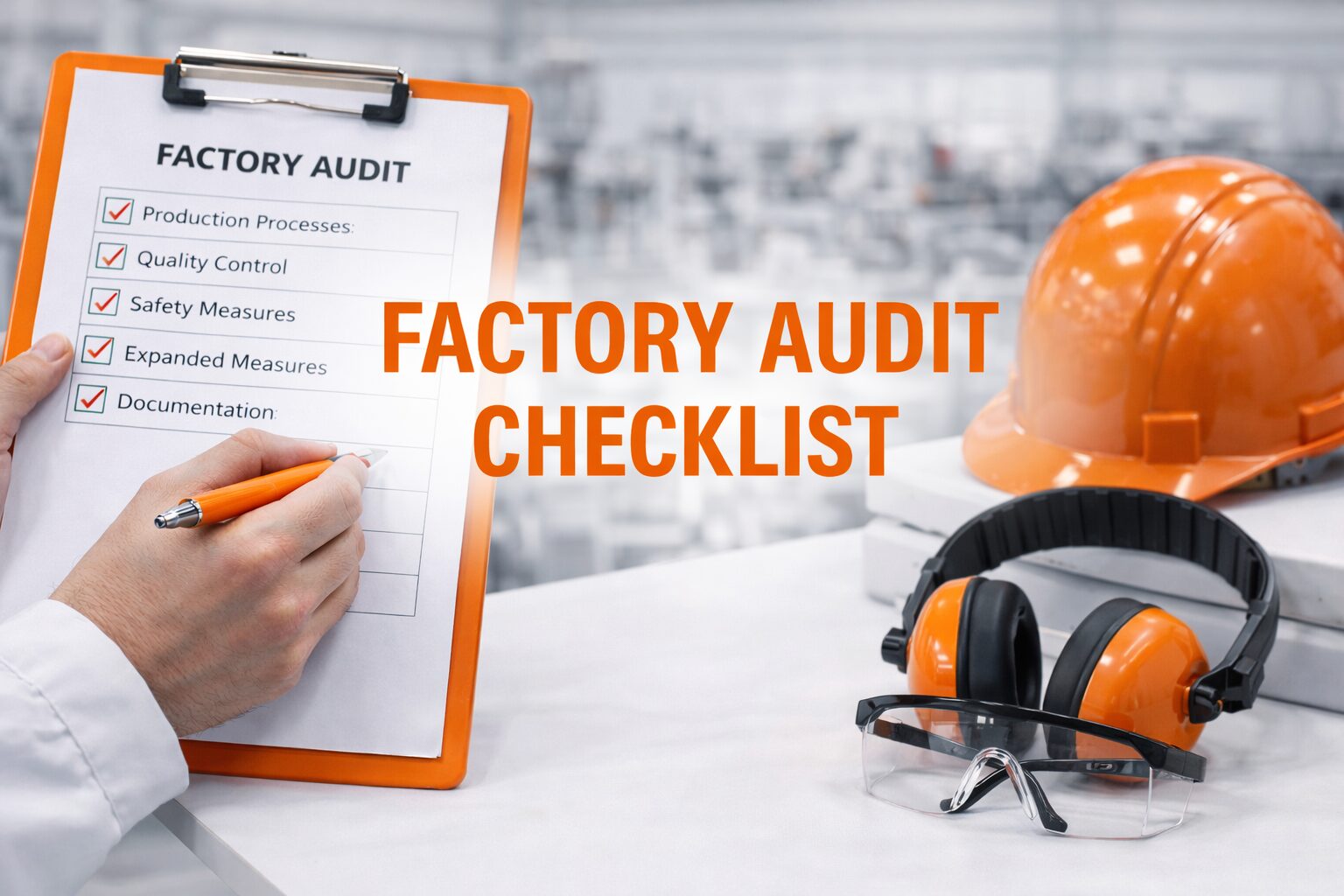
A factory audit checklist is a comprehensive tool used to evaluate a supplier’s reliability, quality systems, and compliance with standards.
QCadvisor has created this extensive checklist to help business owners and entrepreneurs verify that a potential factory can deliver consistent quality and meet ethical, safety, and sustainability requirements before they place an order. Below is an in-depth, step-by-step factory audit checklist organized by major stages.
Each stage includes a brief explanation of why it’s important, followed by a checklist of specific points to verify. This guide is aligned with ISO 9001 quality management principles and also covers social compliance, environmental responsibility, and other key areas to ensure a well-rounded supplier assessment.
Stage 1: Supplier Legitimacy & Documentation
Before investing time and money, you should first verify the factory’s legitimacy. This stage ensures the supplier is a legally registered, credible business and has the required certifications or licenses for manufacturing your product. Checking documentation upfront helps avoid scams or unqualified suppliers and confirms that the factory can legally export goods and meet basic regulatory requirements.
- Business License & Registration: Verify the factory’s business license and registration documents are valid and up-to-date. Ensure the company name, address, and legal status match what you’ve been told.
- Certifications and Standards: Check for relevant certifications (e.g. ISO 9001 quality management certification) and ensure they are authentic and applicable. For example, if the factory claims ISO 9001 certification, request a copy and confirm it’s genuine (check the issuer) and that its scope covers the products you plan to source.
- Import/Export Licenses: If applicable, confirm the supplier has export licenses or any industry-specific permits (for example, a food production license for a food factory). This ensures they are authorized to manufacture and ship the product type internationally.
- Past Performance & Reputation: Ask for references or evidence of past orders. You might check if they have served reputable clients or passed previous audits. Consistent delivery records and client testimonials can indicate reliability.
Financial and Legal Records: When possible, review any available financial statements or do a credit check to ensure the company is financially stable. Also, verify there are no outstanding legal disputes or sanctions against the factory that could disrupt your supply.
Stage 2: Quality Management System (QMS) Audit
A robust Quality Management System ensures the factory can consistently meet your quality standards without constant oversight. An audit of the QMS (often aligning with ISO 9001 requirements) reveals whether the supplier has structured processes for maintaining quality. A factory with a mature QMS will have documented procedures, trained personnel, and continuous improvement mechanisms to catch and prevent issues proactively. This stage verifies that quality isn’t an afterthought, but built into the factory’s operations.
- Quality Manual & Policies: Confirm the factory has an established quality manual or quality policy and that key staff are aware of it. The management should demonstrate commitment to quality objectives and customer satisfaction as per ISO 9001 principles.
- Organization & Responsibilities: Look at how the quality management is organized. Identify the personnel in charge of quality (e.g. a quality manager) and ensure there’s a clear organizational structure for quality duties. A dedicated, independent quality control (QC) team separate from production is ideal (to avoid bias from production staff inspecting their own work).
- Document Control: Check how the factory controls documents and records. Are there procedures to ensure the latest work instructions and specifications are being used on the shop floor? Verify that obsolete documents are removed and quality records (inspection reports, test records, calibration logs) are maintained and easily retrievable.
- Internal Audits & Reviews: Verify the factory conducts regular internal audits of its own QMS and processes. Ask to see recent internal audit reports and how they addressed any findings. Also, check if management holds management review meetings to discuss quality performance and improvements (a requirement in ISO 9001).
- Corrective & Preventive Actions: Determine if the supplier has a system for Corrective and Preventive Actions (CAPA). If there were past quality issues, ask for examples of how they were investigated and fixed. A strong QMS will show evidence of identifying root causes of defects and implementing changes to prevent recurrence.
- ISO 9001 Certification (if claimed): If the factory is ISO 9001 certified, verify the certificate’s validity (check the issue and expiry dates) and that the certification body is reputable. Ensure the scope of certification matches the product or process you’re sourcing (e.g. a certificate for metal parts isn’t useful if you need an electronics assembly). Even without certification, a factory can be assessed against ISO 9001 principles by checking the above elements of their QMS.
Stage 3: Production Capability & Facility Conditions
This stage evaluates whether the factory has the capacity, equipment, and infrastructure to produce your order reliably and at consistent quality. A tour of the production facility can reveal the state of machinery, organization of the workplace, and general working environment. Well-maintained equipment and a tidy, safe facility indicate a disciplined operation, whereas disorganized or poorly maintained production areas can lead to quality problems and delays. Ensuring sufficient capacity also means the supplier can handle your order volume and deadlines.
- Production Lines & Equipment: Identify the factory’s core manufacturing equipment and production lines. Are there enough machines and workers to meet your required volume? Check if the machinery is modern and in good condition. Look for maintenance logs on machines or a preventive maintenance schedule – regular maintenance and calibration of equipment (e.g. injection molders, sewing machines, CNC machines) is crucial for product quality.
- Facility Organization: Observe the general organization and cleanliness of the factory floor. Are workstations and aisles clean and free of clutter? Is there adequate lighting and ventilation in production and inspection areas? Proper lighting is necessary for quality checks. An organized, clean workplace (often following 5S principles) suggests better process control and attention to detail.
- Production Capacity and Flexibility: Discuss production capacity (units per day or month) and see if the factory has capacity charts or production planning records. Confirm they have enough manpower and possibly multiple shifts to handle large orders or peak seasons. If your product is seasonal or requires scaling up, ensure the factory can adjust without compromising quality.
- Technical Capabilities: Check any special technical processes the factory performs (for example, surface finishing, electronics assembly, welding, etc.). Are they done in-house or outsourced? Verify the factory has the expertise and equipment for critical processes of your product. For instance, if it’s an electronics factory, do they have proper soldering equipment and ESD protection (electrostatic discharge safe workstations) for handling sensitive components?
- Equipment Calibration: Ensure that measurement instruments and testing equipment (like calipers, pressure gauges, thermometers, etc.) are calibrated regularly. Ask to see calibration records or stickers on equipment indicating the last calibration date. This is important to maintain accuracy in production and quality inspection results.
- Storage & Warehousing: Inspect the warehouse and storage areas for raw materials and finished goods. Materials should be stored off the ground, in suitable conditions (e.g. dry, climate-controlled if needed). Check that the factory has a system to prevent mix-ups or contamination in storage (especially important for food, pharmaceutical, or any high-risk products). Proper storage of dies, molds, and tooling (if applicable) is also a good sign, as these should be kept in a way that prevents damage and ensures longevity.
Stage 4: Process Control & Quality Assurance
This stage covers the end-to-end production process controls – from how the factory checks incoming materials, through production, to final product inspection. Strong process controls ensure that defects are caught early (or prevented entirely) rather than only at final inspection. By examining these practices, you can gauge whether the supplier is capable of consistently delivering quality products without relying solely on final sorting. It’s essentially a check of their built-in quality assurance processes at every step.
- Incoming Material Inspection: Verify that the factory conducts Incoming Quality Control (IQC) for raw materials and components. Upon receiving materials, they should have a process to inspect or test critical materials for compliance with specifications (e.g. checking fabric weight and color for garments, or electronic components’ ratings). Look for evidence like incoming inspection records, a quarantine area for materials on hold, and clear acceptance/rejection criteria. Proper labeling and storage of materials is part of this – for instance, materials should be labeled with status (accepted/rejected) to avoid mix-ups.
- Supplier & Material Traceability: Ask if the factory maintains an approved supplier list for its key materials and how they qualify new sub-suppliers. They should have traceability systems in place to track materials by lot/batch. This means if a defect is found, they can trace it back to a particular batch of material or component (critical for industries like food, pharma, or electronics). Strong traceability from raw materials to finished goods also supports sustainability and recall readiness.
- In-Process Quality Checks: Determine what quality control checkpoints exist during production. Better factories will have inspectors or trained workers checking semi-finished products at key stages. For example, in electronics, there might be a PCB testing after assembly; in garment production, there could be an in-line inspection after cutting and sewing. Ensure they monitor critical processes (like temperature/humidity for sensitive processes, or torque for assembly screws) and keep records. They should also have a system to segregate non-conforming parts immediately – e.g. bins for rejected items clearly marked to prevent them from proceeding down the line.
- Work Instructions & SOPs: Review some Standard Operating Procedures (SOPs) or work instructions for production processes. These documents should clearly outline how to perform tasks and what quality points to check. Well-developed SOPs (and workers following them) indicate that production is standardized and not left to guesswork. During the factory tour, observe if workers are following written instructions and if those instructions are up-to-date (tie into document control from Stage 2).
- Equipment and Process Calibration: For processes that require precise control (e.g., mixing of chemicals, heat treatment, electronic testing), verify that the factory calibrates and maintains those process equipment parameters. For example, check if ovens have temperature calibration records or if weighing scales on the line are tared and accurate. Consistency in process inputs yields consistent outputs.
- Final Inspection & Testing: Examine how the factory conducts final quality control (FQC) on finished products. They should have a clear procedure for final outgoing inspection – typically using a random sampling of finished goods to check against all specifications. During the audit, you can request to see a demonstration of a final inspection. Key checks often include appearance, functionality, performance, dimensions, and packaging integrity. If there are specific tests (like electrical safety tests, leakage tests, etc.), ensure the factory has the equipment and expertise to perform them. Also, verify they use an appropriate sampling plan (such as ANSI/ASQ Z1.4 AQL standards) for final inspection and have defined acceptance criteria and clear procedures for handling rejects.
- Laboratory Testing (if applicable): Determine if the factory has any in-house lab testing capabilities for quality assurance. Some factories, especially in electronics, chemicals, or textiles, may have labs to test product parameters (e.g. checking material composition, color fastness, tensile strength, or electronic function tests). If they claim to have a lab, inspect it: check the testing equipment and its calibration, and whether lab personnel are trained. For tests the factory cannot do in-house (for example, chemical analyses or complex compliance tests), ask if they use accredited third-party labs for periodic testing. A willingness to do regular lab tests (internal or external) shows a commitment to quality and compliance.
- Control of Non-Conforming Products: Verify that there is a system for handling defective or non-conforming products. There should be a defined area where rejected items are isolated (to prevent accidental shipment), and records of what is done with them (rework, scrap). Check if the factory has procedures to analyze defects found – do they just fix the symptom or also investigate the cause (linking back to corrective action process)?
Stage 5: Working Conditions, Labor & Safety Compliance
Ensuring social compliance and ethical sourcing is crucial for protecting your brand and doing the right thing. This stage examines the factory’s labor practices and working environment, confirming that workers are treated fairly and work in safe conditions. Many buyers (and their end customers) require compliance with standards like BSCI, SEDEX/SMETA, or SA8000, which cover labor rights, health and safety, and ethical business practices. Even if you’re focused primarily on product quality, severe social compliance violations (like child labor or unsafe conditions) are “zero tolerance” issues that can stop a partnership immediately. Auditing these aspects helps ensure the supplier adheres to legal requirements and ethical norms.
- Child Labor and Forced Labor: Confirm the factory does not employ underage workers or forced labor in any form. Auditors typically verify a sample of employee records (IDs or age documents) to ensure all workers are above the legal minimum age. During the visit, observe the production floor – if you see workers that appear very young, that’s a red flag. Also inquire about how they recruit workers and if labor agents are used (to catch any potential forced/bonded labor). This is a critical checkpoint – any evidence of child or forced labor should result in an automatic fail.
- Working Hours and Wages: Review time records and payroll (if accessible) to ensure the factory follows local law on working hours, overtime, and minimum wages. Workers should not be working excessive hours without rest days. Overtime wages should be paid at the proper premium rate. You can also check if there are mechanisms to record attendance (time cards, fingerprint scanners, etc.) and whether those records align with production schedules.
- Worker Safety and Training: Check if the factory provides a safe working environment and necessary safety training to employees. Look for posted safety instructions, warning signs on machinery, and the presence of personal protective equipment (PPE) like safety glasses, gloves, earplugs, or masks where appropriate. Ask if workers receive regular safety training (for example, training on machine operation, chemical handling, or emergency drills). A socially compliant factory should also have an incident log for accidents and a procedure to investigate and prevent future incidents.
- Employee Welfare: Evaluate basic facilities that affect worker welfare: clean bathrooms, access to drinking water, adequate lighting and ventilation, and if provided, check the quality of any canteen or dormitories. These factors, while basic, are important for compliance and worker well-being.
- Legal Compliance and Policies: Ensure the factory complies with local labor laws regarding contracts, social insurance, and other benefits. Each worker should have a proper labor contract. Ask if the factory has any social compliance certifications or audit reports (like BSCI, SMETA) and review the results if available. Factories with these certifications have been evaluated on labor and ethics criteria, which can give you additional confidence.
- Grievance and Management Attitude: Check if there are ways for workers to voice grievances or concerns (suggestion boxes, worker committees, etc.) without fear of retaliation. During the audit, note the attitude of management towards these topics – are they open and transparent or evasive? A cooperative attitude often indicates they take compliance seriously. Also, observe general employee morale if possible. Suppliers that treat workers well often have lower turnover and more experienced staff, which correlates with better quality output.
(Note: Social compliance audits can be extensive on their own. This checklist stage covers the highlights – if serious concerns are noted, a dedicated ethical audit may be needed. However, even a quality-focused audit should include these fundamental checks to avoid partnering with a high-risk factory.)
Stage 6: Environmental Sustainability Compliance
Environmental responsibility has become a significant aspect of supplier qualification. This stage checks if the factory follows environmental regulations and sustainable practices. Non-compliance with environmental laws can lead to legal trouble or supply disruptions (e.g. a factory being shut down by authorities). Additionally, many companies have sustainability goals that require their suppliers to manage waste, reduce pollution, and ensure materials are sourced responsibly. An environmentally compliant factory not only avoids regulatory issues but also helps you meet consumer demand for eco-friendly and sustainable supply chains.
- Regulatory Permits: Verify that the factory has the necessary environmental permits or licenses. For example, permits for air emissions, wastewater discharge, or chemical storage (depending on the industry). Check if these permits are current and if the factory is operating within the allowed limits.
- Waste Management: Inspect how the factory handles waste products. Hazardous waste (like chemicals, dyes, heavy metals) should be stored safely and disposed of by licensed contractors. Solid waste should be managed (sorted for recycling vs. disposal) properly. Look for waste collection areas – are they tidy and clearly labeled? Proper waste management demonstrates compliance with environmental norms.
- Pollution Control: If the manufacturing processes produce emissions (air pollution, water pollution, noise), verify that there are pollution control measures in place. For instance, check for functional fume extractors, filters on discharge pipes, or noise dampening in loud machine areas. Ask if the factory conducts periodic environmental monitoring (e.g. measuring air quality or water effluent quality) as required by local law.
- Resource Usage: Inquire about resource consumption and any efficiency initiatives. Does the factory monitor its water and energy usage? Have they implemented measures to conserve energy (like energy-efficient lighting, optimizing machine run times) or water (recycling water in processes)? While this might be beyond basic compliance, it indicates a proactive approach to sustainability. Some buyers also prioritize suppliers who take steps to reduce their carbon footprint.
- Sustainable Materials and Traceability: If sustainability of inputs is a concern (for example, using recycled or certified materials), check if the factory can provide traceability for those claims. For instance, a textile factory claiming to use organic cotton should have certificates (like GOTS) for the cotton bales. QCADVISOR’s Traceable Sustainability audit approach involves verifying at the source if raw materials meet environmental and ethics requirements. Ensure the factory can trace key materials back to sustainable sources and is not involved in banned substances or conflict materials.
- Environmental Management System: See if the factory has an Environmental Management System (EMS) or follows ISO 14001 standards. While not all will be certified, a factory that has an EMS will have environmental policies, training for staff on environmental protection, and emergency plans for spills or accidents. If they do have ISO 14001 or similar certification, it’s a good sign of systematic environmental management.
- Avoiding Greenwashing: Be cautious of factories making lofty sustainability claims without evidence. During the audit, request documentation for any environmental claims (e.g., recycling rates, carbon reduction, certifications). The goal is to ensure full transparency from raw materials to finished products, to genuinely avoid “greenwashing”.
Stage 7: Supply Chain Traceability & Material Sourcing
This stage looks at the broader supply chain aspects of the factory – how they manage their suppliers and materials, and how reliable they are in delivering products to you. It’s important because even if the factory’s own operations are good, issues in their supply chain (like unreliable sub-suppliers or untraceable sources) can lead to delays or quality problems. Additionally, understanding their sourcing helps ensure ethical sourcing of materials (no conflict minerals, illegal wood, etc.) and that they can meet any specific requirements you have for traceability or approved materials. A supplier’s performance history in meeting commitments is also a strong indicator of future reliability.
- Approved Supplier List: Check if the factory maintains an Approved Supplier List (ASL) for critical raw materials and components. They should have a vetting process for their own suppliers – ask how they evaluate and qualify new suppliers. A factory that blindly buys cheapest materials without oversight could introduce quality risks. A solid factory will keep records of supplier evaluations or incoming material quality trends.
- Traceability Systems: As mentioned under process control, verify the ability to trace materials through the production. Choose a recent batch and ask them to show you, for example, which lot of raw material was used and in which finished goods it ended up. This is crucial for accountability and is often tested in audits – some auditors will simulate a recall to see if the factory can trace a product from finished goods back to specific material lots quickly.
- Lead Times & Inventory Management: Discuss how the factory manages its inventory and lead times. Do they stockpile key materials or rely on just-in-time deliveries? If your product requires long-lead components, ensure they have a strategy to prevent shortages. Good inventory management and realistic lead times mean the factory is less likely to delay your orders.
- On-Time Delivery Track Record: Evaluate the supplier’s track record for on-time delivery and meeting quantity targets. You might ask for their recent OTD (On-Time Delivery) rate or if they have any key performance indicators for customer orders. Consistent lateness or frequent shipment quantity shortfalls could indicate production planning issues or unreliable sub-suppliers.
- Supply Chain Risks & Contingencies: Inquire if the factory is aware of and manages supply chain risks. For instance, do they source critical components from only one sub-supplier (single-source risk)? Have they experienced interruptions (material shortages, power outages, etc.) and how did they cope? A resilient supplier will have some contingency plans (like alternate suppliers qualified, backup power generators, etc.) to ensure continuous production.
- Ethical Sourcing of Materials: If relevant to your industry, ensure that materials are ethically sourced. For example, if it’s a timber product, is the wood from legal and sustainably managed forests (any FSC certification)? If electronics, confirm they are mindful of conflict minerals regulations (such as not sourcing from conflict regions for tin, tantalum, tungsten, gold). Ask if the factory is willing to provide Certificates of Origin or compliance statements for materials if needed. This extends your social compliance due diligence to the supplier’s own supply chain.
Stage 8: Management Commitment & Continuous Improvement
The final stage of the checklist assesses the factory’s management attitude, continuous improvement culture, and security measures. A supplier might pass today’s requirements, but you want to ensure they will maintain and improve standards over time. Management commitment to quality and compliance is the driving force behind consistent performance. Additionally, basic security and risk management practices protect your investment – they ensure the factory’s operations (and your intellectual property or products) remain safe and stable. In essence, this stage is about the factory’s long-term reliability and partnership potential.
- Management Involvement: Verify that top management is actively involved in the quality and compliance programs. For instance, does the general manager or owner participate in opening/closing meetings of audits or quality discussions? A positive sign is when management can speak knowledgeably about quality goals and customer requirements. Management should also empower a culture of quality – if you notice workers are afraid to speak or problems are hidden from the boss, that’s concerning.
- Quality Objectives & KPIs: Check if the factory sets measurable quality objectives (e.g. target defect rate, on-time delivery rate, customer complaint reduction) and tracks them. Ask to see any dashboards or key performance indicators that management reviews. The presence of such metrics, and meetings to review them, indicates a data-driven, proactive approach to improvement.
- Continuous Improvement Programs: Look for evidence of continuous improvement initiatives. This could include methodologies like Lean manufacturing, Six Sigma projects, or Kaizen events aimed at reducing waste and improving efficiency. Even if they don’t use those terms, ask if they have done anything recently to improve processes or quality. A factory committed to improvement might show you examples such as a yield improvement project or investments in new technology to enhance quality.
- Training and Skill Development: Gauge whether the factory invests in employee training and development. Beyond basic worker training, do they provide ongoing training for staff (for example, quality engineers getting advanced certifications, or production staff cross-training in multiple skills)? A skilled and knowledgeable workforce, supported by management, leads to better problem-solving and adaptability over time.
- Security Measures: Check the factory’s security protocols for protecting its assets and your products/IP. Basic things to verify include: controlled access to the facility (security guards, visitor logs, ID badges), CCTV cameras in key areas, proper locking of warehouses, and if relevant, cybersecurity measures for protecting design data. This is especially important if your product or brand is sensitive. Robust security reduces the risk of theft, tampering, or data leaks.
- Risk Management & Business Continuity: Ask if management has assessed major risks to their operations and how they plan for them. For example, what if a key machine breaks – do they have maintenance contracts or backup equipment? How do they handle quality issues – is there a process to quickly respond to and communicate problems? Have they been affected by external issues (natural disasters, sudden regulation changes) and how did they respond? Their answers can reveal if they take a forward-looking approach to ensure stable operations for the long run.
- Ethical Business Practices: Finally, ensure the management practices ethical business conduct. This might include transparency in communication, no use of bribery (some audits include an anti-bribery clause), and respect for agreements. A quick check is to see if they have a code of conduct or anti-corruption policy internally – many reputable factories do, especially if they work with international clients.
With the general checklist above, you can evaluate a factory’s overall suitability. However, each industry has its own specific focus areas and standards. Below, we outline industry-specific checkpoints for eight main manufacturing industries, to be used in conjunction with the universal steps above.
Textiles & Apparel Industry Specific Checks
Apparel manufacturing involves processes like cutting, sewing, and finishing which demand attention to detail for product quality. There’s high reliance on manual labor, so workmanship standards and social compliance are critical. Additionally, fashion buyers emphasize color matching, material quality, and sizing accuracy. This industry also faces social compliance scrutiny, so ethical labor practices are paramount for brand reputation.
- Fabric Quality and Inspection: Verify the factory’s fabric incoming inspection process. Auditors should check how fabric is inspected for defects or color variance. A strong practice is using a fabric inspection machine or at least a visual grading system to catch flaws like scratches, stains, or knitting defects early. The audit can include randomly inspecting fabric rolls for any noticeable defects or off-color pieces.
- Color Consistency & Standards: Color matching is vital in apparel. Check if the factory uses tools like Pantone color standards or lab dips to ensure dye lots match the approved color. During production, pieces of a garment (like front and back panels) should come from the same lot to avoid shade variation. Auditors can request to see how the factory stores fabric lots and handles color approvals.
- Cutting and Sizing Accuracy: The cutting process in apparel is where many quality issues can originate. Audit the cutting room – are patterns being followed accurately? The factory should have marker making to optimize fabric use and ensure pieces meet design specs. An auditor might measure randomly cut pieces or finished garments against the spec (tech pack) to verify sizing tolerances. Consistent measurements (length, width, etc.) are critical; even a small deviation can lead to fit issues.
- Sewing Workmanship and In-Line QC: Observe the sewing lines for workmanship. Check samples at various steps for things like straight seams, proper stitch density, secure attachments (buttons/zippers), and symmetry between pieces. The factory should have in-line QC inspectors who examine partially assembled garments at certain checkpoints (for example, after sewing zippers or before lining is attached). Ask if they use quality gates or end-of-line checkers to catch defects before moving to the next stage.
- Finishing and Ironing: In apparel, the finishing section (trimming threads, ironing, folding, packing) also affects final quality. Ensure there’s a final QC that checks garments for any cosmetic defects, loose threads, stains, or sizing errors after finishing. For instance, white garments might need checking for any dirt or oil marks from machines. Proper ironing equipment and techniques should be in place to avoid shine or scorch on fabrics.
- Social Compliance Focus: Garment factories often employ many workers, sometimes low-skilled and migrant labor. Pay extra attention to working conditions: no child labor, reasonable working hours, and a safe, well-ventilated workshop (especially if there are fabric dust and chemicals from processes like screen printing). Many fashion brands require audits per standards like WRAP or BSCI, so an apparel factory audit should include a thorough check of wage records, age verification, and worker health and safety as described in Stage 5.
- Product Safety and Regulations: If the apparel is for export, ensure the factory is aware of any product safety regulations (like flammability standards for children’s sleepwear in the US, or banned azo dyes in the EU). They should have controls to source compliant materials (dyes, buttons without heavy metals, etc.) and possibly lab test certain items. This check is especially crucial for baby or kids’ clothing.
Electronics & Electrical Industry Specific Checks
Electronics manufacturing demands a high level of precision and process control. There are unique requirements like ESD protection, intricate assembly processes (PCBs, soldering), and rigorous testing for functionality and safety. Small component defects can cause big reliability issues. Additionally, compliance with standards (e.g. CE, FCC) and absence of hazardous substances (RoHS) must be ensured. An audit in this sector focuses on technical capabilities and process discipline to handle complex assemblies.
- Electrostatic Discharge (ESD) Controls: Check if the factory has proper ESD protection measures in areas handling sensitive electronic components. This includes ESD-safe workbenches and flooring, grounded wrist straps for workers, anti-static mats, and humidity control. During the walkthrough, note if PCB assembly operators are wearing wrist straps and if sensitive components are kept in anti-static bags. Lack of ESD controls can silently damage electronics, leading to high failure rates.
- Component Storage and Identification: Audit the storage of electronic components (ICs, capacitors, etc.). They should be well-organized, labeled with part numbers and date codes, and stored in appropriate conditions (e.g. moisture-sensitive components in dry boxes with humidity control). Ask how they ensure the correct components are used – for example, do they have a picking system or double verification to avoid wrong parts being soldered.
- PCB Assembly Process: If the factory makes printed circuit board assemblies (PCBA), examine the soldering process (SMT and/or through-hole). Key points: For SMT, is the solder paste printing done with proper equipment and paste refrigeration control? Are reflow ovens profiled correctly for temperature? For manual soldering, are workers skilled and following IPC standards (check a sample board for solder joint quality)? The factory should have inspection after soldering – either visual inspection or Automated Optical Inspection (AOI) for SMT boards.
- Testing Capabilities: Electronics require testing at multiple stages. Check if the factory performs in-circuit testing (ICT) or functional testing on boards. They may have custom test jigs – ask to see how they verify each unit’s functionality. For finished electronic products, ensure there’s a final function test procedure (powering the device on, checking basic functions). If safety certifications are needed (like UL), the factory should do hi-pot or grounding tests on applicable products. The audit should confirm the presence and calibration of testing equipment like multimeters, oscilloscopes, or specialized testers, as well as the training of test operators.
- Critical Component Control: Identify any critical components (e.g. batteries, microchips, power supplies) in the product and ensure the factory has special handling and verification for these. For example, lithium batteries should be from approved suppliers and stored safely. Key ICs might need programming – check how they manage firmware loading and whether the software versions are controlled. In quality audits for electronics, emphasis is placed on ensuring the right components (by spec and version) go into the product, because a wrong or counterfeit component can be catastrophic.
- Environmental and Regulatory Compliance: Verify the factory is aware of and complies with electronics regulations: RoHS compliance (Restriction of Hazardous Substances – no lead, mercury, etc. beyond limits), and if applicable, REACH for chemicals or CE marking requirements. They should have documentation (Material Declarations from part suppliers, lab test reports) to prove compliance. If they produce for the U.S., FCC rules for emissions may apply – ask if they have procedures to ensure products are tested or designed to meet those standards.
- Electronics Lab and Repair Area: If available, check the electronics lab or repair station. Often there is an area where failed boards/devices are analyzed and reworked. This area should have skilled technicians, soldering/desoldering tools, and possibly microscopes. The presence of a proper failure analysis process (like using root cause analysis on why a board failed) indicates a mature quality mindset.
- Traceability for Electronics: Traceability is crucial in electronics in case of recalls. The factory should mark PCBs or products with serial or lot numbers. Ask if they maintain records that link each batch of output to the specific component lots or production date. This ties into Stage 7 – especially important for electronics because of potential field failures needing trace-back.
Food & Beverage Industry Specific Checks
Food and beverage manufacturing must adhere to strict hygiene and food safety standards. Issues here can directly impact consumer health, so audits focus on cleanliness, temperature control, prevention of contamination, and robust food safety management systems like HACCP. Additionally, there are often regulatory standards (FDA, EU food laws) that the factory must comply with. The environment is very different from general manufacturing – you’re looking at things like cleanliness of surfaces, proper storage of ingredients, and pest control, rather than mechanical tolerances.
- Hygiene and Sanitation Practices: Observe the overall cleanliness of the facility. Production areas should be clean and organized for sanitation – no build-up of food residue on machines or floors. Check if workers follow personal hygiene rules: wearing hair nets, gloves, aprons, and washing hands before entering production. There should be handwashing stations with soap and signage reminding of hygiene. Also verify that ill or injured staff are excluded from handling food, per GMP guidelines.
- Equipment and Utensil Cleanliness: Inspect food-contact equipment (mixers, conveyors, tables) for cleanability. Surfaces should be smooth, non-corroding, and easy to clean. Ask about the cleaning schedule and chemicals used – for example, are there Standard Sanitation Operating Procedures (SSOPs) for daily and deep cleaning? Proper separation of cleaning tools (color-coded for toilets vs production area) is another sign of good practice. If possible, review sanitation logs which show cleaning dates/times for equipment.
- Temperature and Process Control: Many food/beverage processes depend on temperature control for safety (cooking, pasteurization, refrigeration). Check if the factory monitors temperatures: e.g., refrigerators and freezers should have thermometers and logs; pasteurization charts should be recorded. Thermometers and other instruments must be calibrated – ask to see calibration records for critical instruments like temperature probes, pH meters, or scales. Confirm that the factory maintains proper cold chain for perishable goods (ingredients arriving and products stored at correct temperatures).
- HACCP Plan and Food Safety System: Determine if the factory has a HACCP plan (Hazard Analysis Critical Control Points) or a Food Safety Management System (like ISO 22000 or FSSC 22000). They should have identified hazards and established controls for each critical point. Ask about critical control points (CCPs) in their process – for instance, cooking temperature, metal detection, or pH levels – and how they monitor them. Review records of CCP monitoring (they should have logs with dates, results, and any corrective actions if limits were exceeded). An auditor might test their traceability by asking for a mock recall: show how they’d trace a finished product batch back to raw material lots within, say, 2 hours.
- Ingredient and Allergen Management: Check how ingredients are stored and handled. All ingredients should be properly labeled (name, delivery date, lot, expiry). Storage should prevent cross-contamination – e.g., allergens separated (allergen management is critical: factories must avoid allergen cross-contact by segregating allergen-containing ingredients and scheduling production to minimize cross-contact). Dry goods off the floor, chemicals (cleaners) stored away from food, etc. If the product has an allergen, confirm the factory’s process to label it and prevent accidental mixing into non-allergen products.
- Pest Control: A food factory must have an active pest control program. Look for insect traps or bait stations along walls, and check if there’s a contracted pest control service (often documented in a log or reports). No signs of infestation (no droppings, no dead insects inside devices) should be seen. Verify doors have screens or air curtains if they are often open, to keep pests out.
- Sanitary Facilities: Inspect restrooms, changing areas, and waste disposal areas. Restrooms should not open directly into production areas and must be clean with handwashing notices. There should be facilities for workers to change into protective clothing. Waste (food waste, packaging waste) should be managed so it doesn’t attract pests or contaminate product (covered bins, removed frequently). Also, check for proper plumbing and drainage – standing water in production is a hazard; drains should be covered and flow away from processing areas.
- Regulatory Compliance: Ensure the factory meets local food safety regulations and any international standards required for export. For example, if exporting to the US, do they follow FDA’s FSMA requirements? If they have had any government inspections, you might ask to review the outcome or any corrective actions from those. Also, verify product-specific regulations: for beverages, maybe check if they adhere to bottling regulations; for canned foods, low-acid canned food rules, etc.
- Laboratory Testing & Microbial Control: Many food factories send samples for lab testing or have a small lab for basic tests (like checking microbial counts, moisture content, etc.). See if they routinely test products for microbiological contamination (especially for ready-to-eat foods). If they have a retention sample program (keeping samples from each batch), that’s a plus. Check their environment monitoring if applicable – some will test swabs from equipment for bacteria to verify cleaning effectiveness.
Automotive & Machinery Industry Specific Checks
Automotive parts and heavy machinery manufacturing demand very high quality standards because component failure can have serious consequences (safety, huge warranty costs). The industry often requires compliance with IATF 16949 (automotive quality standard) and use of specific tools (APQP, PPAP, etc.). Key focuses include precision, consistency, and robust process controls. Traceability and documentation are also critical, as is the ability to meet tight tolerances and rigorous testing (e.g., for engine parts, etc.). An audit here digs deep into process capability and quality assurance at every step.
- Precision and Tolerances: Check that the factory is capable of holding tight tolerances required for automotive/machinery parts. This means looking at their machining processes, molds, or assembly fixtures. Audit the calibration records of critical measuring tools like CMMs (Coordinate Measuring Machines), micrometers, and gauges – these should be calibrated and traceable to standards, given the precision needed. You may inspect some measurement reports or conduct a spot measurement on a critical dimension of a sample part to verify the accuracy of their quality control.
- Quality Management – Automotive Specific: If the supplier is in the automotive supply chain, ask if they are IATF 16949 certified or compliant. They should be familiar with automotive core tools: APQP (Advanced Product Quality Planning), PPAP (Production Part Approval Process) submissions, FMEA (Failure Mode and Effects Analysis) for processes, and SPC (Statistical Process Control) on critical characteristics. Review any control plans – a document that lists how each critical feature is controlled and checked in mass production. The presence of these documents and practices indicates a sophisticated quality system tuned for automotive standards.
- Production and Capacity for Volume: Automotive orders can be large and demand consistent cycle time. Check if the factory has automated production lines or jigs/fixtures to ensure consistency. For example, welding jigs for automotive parts or automated assembly lines for mechanical components. Evaluate if they can scale up production while maintaining quality (multiple identical machines, or robust production planning with shifts, etc.).
- Traceability & Lot Control: In automotive, every part often needs traceability (to support recalls if needed). Ensure the factory marks products or batches with identifiers (date codes, lot numbers, serial numbers). They should maintain records linking each batch to raw material lots, machine settings, or inspection results. This might extend to individual component traceability if critical (for example, each airbag inflator has a unique serial). An auditor might challenge the factory to trace a component’s history from production records – good suppliers can readily provide this.
- Testing and Validation: Machinery parts (gears, engines, electronics) require thorough testing. Audit the in-house testing facilities: they might have life-cycle test rigs, pressure testers, hardness testers, etc. For instance, an automotive rubber parts factory should have an aging tester, ozone tester, and tensile tester to validate parts meet specs. Check if the factory does 100% end-of-line testing for certain safety-critical attributes (common in automotive; e.g., every ABS sensor might be individually tested for functionality). If they outsource testing to specialized labs (for metallurgical analysis, for example), ensure they have schedules and records of those too.
- Maintenance & Downtime: A well-run machinery factory will have a robust preventive maintenance schedule to avoid unexpected machine breakdowns that could delay orders. Check maintenance logs (some factories post them on each machine). Downtime in automotive supply can shut down a car assembly line, so suppliers often track OEE (Overall Equipment Effectiveness). While auditing, ask if they record and analyze downtime and have quick troubleshooting practices for critical equipment.
- Supply Chain and Materials: The materials (steel grades, plastics, etc.) in automotive parts are often specialized and must meet standards (e.g., ASTM, ISO, DIN specifications). Verify the factory has material certificates on file for the raw materials used. For a metal part, they should have mill certificates for each steel lot and possibly do incoming spectroscopy to verify composition. For critical bought-out components (like bearings or electronic modules used in machinery), ensure they source from reputable suppliers and have incoming inspection/test for those as well.
- Safety and Compliance: If the factory produces completed machinery or parts that require certification (like CE marking for machinery safety, or DOT for automotive lighting, etc.), ensure they understand and adhere to those regulations. They might need to provide declarations of conformity or test reports (like vibration or shock testing for parts, or emissions testing for engines). Additionally, audit their workplace safety (as heavy machinery manufacturing can be hazardous): check for proper machine guarding, lockout-tagout procedures for maintenance, and forklift safety in the plant.
Furniture & Home Goods Industry Specific Checks
Furniture (especially wooden furniture) and home goods manufacturing combines both handcrafted and industrial processes. Key concerns include the quality of raw materials (wood moisture content, fabric durability), the strength and stability of constructions, and the finish (paint, varnish) quality. Packaging durability is also crucial due to the bulk of items. Audits in this industry focus on craftsmanship, material handling, and environmental factors that could affect product longevity (like moisture or pest control in wood).
- Wood Moisture Content: For wooden furniture, one of the most important checks is the moisture content of wood used. Wood that isn’t properly dried can warp, crack, or grow mold after assembly. Ask if the factory uses kiln-dried wood and measure the moisture content of some wood pieces (usually should be in an acceptable range, often 8-12% for indoor furniture, depending on climate). The factory should have a moisture meter on-site. If the audit finds high moisture in wood parts, that’s a red flag for future quality issues.
- Material Quality and Storage: Inspect how materials like wood, fabric, foam, etc., are stored. Wood panels or lumber should be stored in a dry, covered area (ideally acclimatized to the factory environment). Check for any signs of pest infestation (look for bore holes in wood that indicate wood-boring insects – factories should fumigate or chemically treat wood if required). For upholstery, confirm fabrics are kept clean and rolled to avoid creases or moisture.
- Joinery and Construction: Furniture durability heavily depends on the joinery and hardware. Audit the production process to see how joints are made: e.g., dowel joints, mortise and tenon, screws, or cam locks for KD (knock-down) furniture. Joint strength should be tested – the factory might have testing jigs or at least do manual stress tests on a sample unit. Check if they apply the correct amount of glue and allow curing time for glued joints. For metal furniture or components, inspect weld quality (no cracks, proper bead). If possible, sit on or physically stress a sample furniture piece to gauge sturdiness.
- Fit and Assembly: Ensure that parts fit well together in the final assembly. Poor fitting can cause instability or noise. If it’s RTA (Ready-To-Assemble) furniture, maybe request to see how they do a trial assembly. All pre-drilled holes should align properly, and fasteners should tighten securely. Auditors sometimes do a partial assembly of a randomly selected product to verify everything matches the specification and that assembly instructions (if provided) are accurate.
- Surface Finish Quality: Furniture often has coatings (paint, varnish, laminate) that need inspection. Check the finishing process – is it done in a controlled dust-free area? Look closely at finished surfaces for consistency: color uniformity, gloss evenness, no runs or bubbles in paint, no rough spots or sanding marks under the finish. Also verify edges and corners are smoothly finished (no sharp edges or splinters). If staining wood, the color should be even. The factory should also control for hazardous substances in paints/finishes (lead content, for example, should comply with regulations). They might have test reports for their coatings.
- Dimensions and Functionality: For functional home goods or furniture, measure key dimensions on a finished product to ensure they meet specs (e.g., the height of a chair, depth of a shelf). If the item has moving parts (drawers, hinges on a cabinet, extendable parts), test their operation: drawers should slide smoothly; doors should align and open/close properly. Any mechanism (like a reclining chair or adjustable height) should be cycled to see if it operates without issue.
- Packaging and Drop Testing: Furniture and large home goods are prone to shipping damage due to size and weight. Examine the packaging design – is the product well-protected with foam, corner protectors, etc.? Ask if the factory performs any carton drop test or vibration test simulations. They should at least have a procedure to evaluate packaging adequacy (especially for export, where rough handling is common). You might inspect a packaged unit to see if the contents are secure and the carton is sturdy (double-walled corrugated, for example, with proper stacking markings).
- Regulatory Compliance: Depending on the product, check compliance with applicable standards. For example, formalisdehyde emissions for wood composite panels (there are standards like CARB in California or E1/E0 in other regions), or flammability of upholstery foam (TB117-2013 in California). The factory should be aware of these and have documentation or testing to prove compliance if selling to those markets.
Toys & Children’s Products Industry Specific Checks
Toys and juvenile products must meet stringent safety standards, as they are used by children. This industry is heavily regulated (e.g., ASTM F963, EN 71, CPSIA) to ensure products are free of hazards like choking, toxic materials, sharp edges, etc. An audit for a toy factory focuses on how they incorporate safety and quality into their production – from design controls to material selection and testing. Additionally, social compliance is critical here too (no child labor in a toy factory for ethical consistency).
- Safety Design Awareness: Gauge the factory’s familiarity with toy safety standards. They should design and produce toys to avoid hazards such as small parts (for kids under 3), sharp edges, or points, and excessive noise levels for certain toys. During the audit, check if they have reference documents of standards or if key staff can explain the safety requirements for the markets they ship to. For example, for EU exports, EN 71 parts 1 (mechanical/physical), 2 (flammability), 3 (chemical) are mandatory, and the factory should know these basics.
- Materials and Chemicals: Inspect what materials are used in the toys (plastics, paints, fabrics, etc.). All should be non-toxic and compliant with regulations like CPSIA for lead and phthalates in the US. The factory should have certificates or lab test reports for their materials – e.g., paint lead content tests, plasticizer (phthalate) tests for soft plastics, etc. If the toy has electronics, RoHS compliance is important as well (no hazardous substances). Also, verify that small components (screws, eyes on plush toys, etc.) are secured properly so they don’t detach easily and become choking hazards.
- Production Process Controls for Safety: See how the factory ensures each toy coming off the line meets safety criteria. For instance, do they have a torque and tension test device to check that wheels, eyes, or other attached parts can’t be pulled off easily (as required by ASTM/EN standards)? Do they perform edge and tip checks to smooth out any sharp points? If it’s a battery-operated toy, they should ensure the battery compartment is secure (requiring a tool or two independent movements to open, per safety standards). Ask if they conduct routine drop tests or use gauges (like a small parts cylinder) during in-process QC to catch potential hazards.
- Age Grading and Labeling: Evaluate how the factory determines the age grading of the toy (e.g., 3+, 8+, etc.) and if the product and packaging are labeled accordingly. Age grading drives many design aspects and warnings. The factory should be following the designer’s intent for age grading and applying any necessary warning labels (such as “Not for under 3 years” with a choking hazard warning if there are small parts). Confirm that packaging includes all required safety markings (like CE mark for Europe, ASTM F963 labeling for certain toys, and tracking labels required by CPSIA indicating production date and factory).
- Testing and Certification: Ask about the factory’s experience with third-party toy testing labs (such as Intertek, SGS, TÜV, etc.). A responsible toy factory will often send samples from each batch or at least each product model for lab testing to certify they meet safety standards. Check if they maintain copies of test reports or Children’s Product Certificates for products they’ve made. If they produce ride-on toys or electrical toys, additional tests like stability, overload, or electrical safety should be known to them.
- Quality Control Team & Knowledge: Since toys often involve many components and manual assembly (for plush, stitching; for plastic toys, assembly of many pieces), a skilled QC team is important. Inquire about the QC team’s size and training. Do they have inspectors who specifically check for cosmetic defects, function (like does the toy do what it’s supposed to), and safety issues on the line? A good toy manufacturer will have checkpoint QC inspections: for example, checking a plush toy’s seams and stuffing before closing, or a plastic toy’s screw tightness before packaging.
- Social Compliance: Given the product is for children, stakeholders often expect the manufacturer to uphold high ethical standards. Ensure, as with Stage 5, that no child labor is used in the toy factory, and that workers have a safe environment. Many toy brands are part of the ICTI Ethical Toy Program (IETP) or similar – if your supplier has an ICTI certification, that’s a strong indicator of social compliance tailored to toy factories. If not, at least apply the social compliance checks: age verification of workers, reasonable hours, etc., to avoid any hypocrisy of using exploited labor to make products for children.
- Prototype and Change Control: If the factory does product development, check how they manage design changes or new product introduction. They should build prototypes and possibly do test assemblies or pilot runs to flush out issues. Ensure that any changes to materials or design get re-evaluated for safety compliance – for example, if they switch a type of plastic, do they realize they might need to re-test for chemical safety? This point is more abstract, but it separates a factory that is quality-driven from one that might unknowingly introduce risks when making changes.
Pharmaceuticals & Medical Devices Industry Specific Checks
Pharmaceutical and medical device manufacturing are among the most regulated industries. Quality here is directly tied to patient safety. Facilities must follow Good Manufacturing Practices (GMP) rigorously – often needing certifications like FDA cGMP for drugs or ISO 13485 for medical devices. The audit focuses on cleanliness (sometimes cleanroom environments), meticulous batch record-keeping, full traceability, and validation of processes. Even if you are not an expert in pharma/medical, key principles like sterility (where required), calibration of all test equipment, and compliance with regulatory approvals are the focus.
- Regulatory Compliance & Certifications: First, verify what regulatory framework the factory operates under. For pharmaceuticals, do they have a license from the health authority (FDA, EMA, etc.) to produce those drugs? For medical devices, are they ISO 13485 certified or registered with FDA if exporting to the US? Ask to see relevant certificates or audit reports. Compliance history is key – if possible, find out if they have had any major regulatory findings or warnings (like FDA warning letters) and how those were addressed.
- Cleanliness and Environment Control: In pharma/medical production, environment control is critical. If the product is sterile (e.g., injectables, implants), the factory should have cleanrooms. Audit the cleanroom management: appropriate gowning for personnel (coveralls, masks, gloves), air filtration (HEPA filters), and regular monitoring of particulate and microbiological levels. Even for non-sterile products, production areas should be very clean and orderly. Look at sanitation procedures – they should regularly clean equipment and rooms, with documented schedules. There may be restricted access zones to minimize contamination; check if that’s enforced.
- Batch Records and Traceability: Every batch of product (whether pills, creams, or medical devices) should have a batch manufacturing record (BMR) or Device History Record that details all steps, raw materials, in-process checks, and personnel involved. During the audit, review a sample batch record for completeness: it should show each process step signed off, lot numbers of all ingredients/components used, equipment IDs, and test results. Traceability is paramount: they should be able to trace each batch of product to all its raw materials (with supplier lot numbers) and vice versa (for recalls).
- Quality Control Lab: Pharmaceutical and many medical device factories have an in-house QC laboratory for testing raw materials, in-process samples, and finished products. Audit this lab – check calibration and maintenance of lab instruments (HPLCs, spectrophotometers, balances, etc.), proper documentation of test results, and secure storage of reserve samples. The lab should follow Good Lab Practices: reagents labeled and not expired, controlled temperature/humidity, and possibly a reference standards library. You might not re-test products, but verifying the lab’s operation gives insight into quality rigor.
- Process Validation: In regulated industries, critical manufacturing processes and equipment must be validated (proven to consistently produce results meeting specifications). Ask if they have validation protocols and reports for key processes – for example, sterilization processes (autoclaves, gamma irradiation), tablet compression, or packaging sealing processes should be validated. They should also validate computer systems or software used in production/QC. During audit, you might not dig deeply into these, but the presence of validation documents and an understanding by staff of “this process is validated” indicates compliance.
- Calibration and Preventive Maintenance: Ensure all equipment that can impact product quality is calibrated and maintained. This includes production equipment (pressure gauges, temperature controllers on reactors or ovens, etc.) as well as measuring instruments. Check the calibration schedule – pharma/medical will often calibrate more frequently (e.g., balances might be daily verified). Preventive maintenance should be scheduled to avoid unexpected breakdowns that could compromise a batch mid-process. This information might be documented in the batch record too (ensuring equipment was within calibration when used).
- Controlled Materials and Storage: Inspect the storage of raw materials and components. Typically, there is a quarantine area for new raw materials until QC approves them. Labels on raw materials should indicate status: e.g., “Quarantined – awaiting QC”, “Released”, or “Rejected”. Temperature-sensitive materials (certain chemicals, biologics) must be in monitored fridges or freezers. For medical devices, components like sterile packaging or electronic parts should be stored to prevent damage. If the product is a drug, also check that warehouse management ensures FEFO (First Expiry First Out) so older batches are used first.
- Documentation and Change Control: Look at how documents are managed – there should be a robust change control system. Any change in process, equipment, or formulation must be approved and documented. If possible, ask for an example of a change request or deviation report (if something went wrong in a batch, how did they document and investigate it). Pharma/medical companies will have extensive paperwork; your goal is to see that they follow those procedures meticulously, because any laxity can indicate potential for compliance issues.
- Product Release and Customer Complaints: Finally, see how final products are released. Usually a Qualified Person or Quality unit reviews all batch documentation and test results before signing off a batch for sale. This ensures no deviations were unaddressed. Also, ask about how they handle complaints or recalls – a good manufacturer will have a system to log complaints, investigate if a batch had an issue, and a recall procedure in place if needed.
Chemicals & Cosmetics Industry Specific Checks
Chemical manufacturing (including paints, industrial chemicals) and cosmetics/personal care production involve handling of various chemicals with safety and quality implications. These factories must manage chemical hazards, precise formulations, and often abide by GMP standards (for cosmetics, ISO 22716 is a guideline). Environmental and worker safety is a huge focus because of potential chemical exposure and pollution. Product consistency and testing (stability, purity) are important to ensure the chemicals/cosmetics meet specifications and regulations (like FDA cosmetic rules or REACH in Europe).
- Chemical Storage and Handling: Audit how raw chemicals are stored. There should be a designated storage area for chemicals with proper segregation (for example, acids away from bases, flammables in a ventilated cabinet, etc.). Check for appropriate labeling on all containers (name, hazard class, and handling instructions). The factory must have Material Safety Data Sheets (MSDS) available for all chemicals on site. Workers handling chemicals should wear suitable PPE (gloves, goggles, respirators if needed) and be trained in handling and emergency measures. Notice if there are eye wash stations and spill kits accessible – this indicates preparedness for accidents.
- Formulation and Mixing Process: In cosmetics or chemical formulation, the mixing process needs precise measurements. Verify the factory uses calibrated scales and follows written formulas (batch sheets). They should have a batch manufacturing record similar to pharma for each mix, noting lot numbers of ingredients, quantities, and mixing times/temperatures. During the audit, see if operators cross-verify ingredients before adding (to avoid mistakes). Some factories employ automated dosing systems – if so, check their calibration. For cosmetics, see if any ingredients are premixed or require special handling (like heating oils, etc.) and how that’s controlled.
- Quality Testing – Chemistry: The factory should have a lab or testing capability to check each batch’s quality. For chemicals, that could mean titration, purity tests, concentration checks, viscosity, etc., depending on the product. For cosmetics, tests might include pH, viscosity, microbiological testing (especially if water-based product prone to microbial growth), and stability testing (ensuring the product doesn’t separate or degrade over time). Ask if they do stability studies (cosmetics usually undergo heat/cold cycling tests to simulate shelf life). The presence of ongoing stability samples and finished product retains is a good practice.
- Regulatory Compliance: Ensure they comply with any chemical regulations: e.g., REACH compliance for chemicals in the EU (registration of substances), or if they export cosmetics to the EU, that they follow the EU Cosmetic Regulation (no banned substances, appropriate labeling, etc.). In the US, cosmetics should be made per FDA’s Good Manufacturing Practice guidelines (21 CFR 700). If the product is considered an OTC drug (like sunscreen, anti-acne), even stricter FDA regulations apply. Check if they maintain documentation like ingredient lists, formula percentages (for confidentiality you might not get details, but at least confirm they have it organized), and product technical data sheets.
- Waste Treatment and Emissions: Chemical processes can produce harmful waste or emissions. Audit the factory’s effluent treatment system: for instance, do they neutralize waste water or have an on-site treatment plant? Check air emission controls if there are volatile fumes – are there scrubbers or filters for vents? Storage of waste: barrels of chemical waste should be labeled and stored safely awaiting disposal. Request records of waste disposal; responsible factories will have contracts with licensed waste handlers and manifests for disposed quantities. This ties back to environmental compliance in Stage 6, but it’s especially crucial in chemical manufacturing to prevent pollution incidents.
- Explosion and Fire Safety: Flammable chemicals require strict fire safety measures. Verify if the plant has explosion-proof electrical fittings in areas with solvent vapors. There should be no sources of ignition where flammables are handled (including static sparks – hence grounding of containers during transfers). Look for fire suppression systems, sprinklers, or at least ample fire extinguishers of the correct type (chemical fires often need foam or dry powder, not just water). Check if safety drills or training on chemical fires are conducted. Local code may require a certain distance between storage of large quantities of flammable material and production; see if that’s observed.
- GMP for Cosmetics: For personal care products, many principles from pharma GMP apply. This includes cleanliness of the production area (perhaps not to sterile levels, but certainly hygienic since products like lotions can grow bacteria). Workers should follow hygiene practices (gloves, hairnets) to avoid contaminating products. Equipment in contact with product (mixers, filling machines) must be cleaned and, if necessary, sanitized between batches. Auditors should check cleaning logs for equipment and verify no cross-contamination between different products (especially important if the factory makes, say, both a peanut oil-based cream and others, due to allergen concerns).
- Packaging and Label Control: In chemical and cosmetic industries, packaging (bottles, tubes, labels) is part of the process. Ensure they have controls to prevent mix-ups of packaging – e.g., the wrong label on a product. The audit can include a walkthrough of the packaging line: check that coding (like batch numbers, expiry dates) is correctly applied on the units. For cosmetics, packaging integrity is key (no leaking bottles, proper seals on jars, etc.), so see if they conduct any leak tests or seal tests. Also, the content volume/weight should be accurate – they might have a checkweigher on the line to ensure each bottle has at least the declared volume.
Using this Checklist
By following each stage of this comprehensive checklist, whether you are an entrepreneur or small business owner you can methodically assess a factory’s suitability. This ensures you verify everything from legal compliance and production capabilities to ethical practices and quality systems.
While the checklist is detailed, it provides a clear roadmap to perform a DIY factory audit or to understand the process when hiring professional auditors.
Remember that industry-specific nuances are as important as the general quality management aspects – a truly qualified supplier will meet both the universal standards and the specific requirements of their industry.
If any stage of the audit reveals major non-compliance or risks, it may be wise to address those issues with the supplier or reconsider the partnership. Conducting such thorough audits before placing an order helps you avoid costly surprises, ensure product quality, and uphold your brand’s reputation by sourcing from factories that meet ISO 9001 quality standards, social compliance, and sustainability goals.
Ultimately, a well-executed factory audit (whether done personally or through a professional service) is an investment into the long-term success and reliability of your supply chain. It builds a foundation of trust and transparency between you and your supplier, which is invaluable as your business grows.