Finding a good factory audit provider requires evaluating 7 key factors — from audit type coverage and auditor credentials to pricing transparency and geographic reach across Asia.
The process involves defining your audit scope, verifying provider accreditation, requesting sample reports, checking auditor profiles, and running a pilot audit before committing to a full supplier audit program.
Key Takeaways
- Third-party factory audits — conducted by companies with no factory ties deliver the most reliable results.
- Factory audit pricing spans USD 188 to USD 900+ per man-day; request all-inclusive quotes only.
- Verify ISO/IEC 17020 accreditation and individual IRCA auditor certificates before committing.
Only 13% of supply chain respondents report having full visibility of their sourcing networks including raw materials — which means most buying decisions rest on incomplete information about who is actually making your products.
I have spent years advising importers who source from China, Vietnam, India, Bangladesh, and across Southeast Asia.
The single most common mistake I see is treating factory audits as a commodity purchase — picking the cheapest name on a directory and hoping for the best. The reality is that factory audit services vary enormously in quality, independence, and geographic capability.
framework for choosing the right provider and not getting burned by the ▎ wrong one. This guide covers the 8 audit types and how to match them to your ▎ risk profile, the credentials that separate a legitimate provider from a ▎ checklist operation, the red flags that consistently signal fraud, pricing ▎ benchmarks from USD 188 to USD 900+ per man-day, and why audit requirements ▎ shift country by country across China, Vietnam, India, Bangladesh, and four ▎ other Asian sourcing markets
Why Should Importers Commission a Factory Audit Before Placing Orders?
A factory audit is preferred over relying on self-reported supplier claims or certificates for quality assurance because it is the only mechanism that gives you direct, verified evidence of what a supplier can — and cannot — do. The case for making factory auditing non-negotiable rests on 6 core reasons.
Only 13% of supply chain respondents reported having full visibility of their sourcing networks, including raw material suppliers, according to the QIMA Q2 2025 Business Barometer (LR007). That number should stop you in your tracks. You are most likely operating with incomplete information about the factories you depend on — as are most of your sourcing peers. A factory audit addresses that visibility gap directly.
The 6 reasons every importer sourcing from Asia should commission a factory audit:
- Risk reduction. Conducting a factory audit minimizes operational, security, and quality risk before production begins (F037). You identify problems when they are still correctable — not when a non-compliant shipment is sitting in a port warehouse.
- QMS verification. A factory audit verifies that a supplier’s quality management system (QMS) aligns with your business requirements (F038). A supplier may claim to follow ISO 9001 processes; an audit confirms whether those processes are actually implemented on the shop floor.
- Full operational visibility. Factory audits provide a comprehensive understanding of supplier capabilities and viability by allowing you to see actual operations, not self-reported claims (F039). Supply chain transparency achieved through audits reveals supplier performance weaknesses before they become your shipment problems (F042).
- Working condition verification. Audits confirm that factory working conditions, equipment, and policy implementation meet the standards your brand and end market require (F040). For EU and US buyers, this is increasingly a legal and reputational obligation.
- Proactive compliance identification. Factory audits confirm that a supplier is following laid-out regulations, identifying compliance issues proactively and saving you time and resources versus discovering issues post-production (F041).
- Operational efficiency gains. Factory audits identify operational inefficiencies, enabling waste reduction and cost optimisation within your supply chain — turning audit findings into direct cost savings beyond simple compliance.
Beyond these operational benefits, factory audits provide long-term financial value. A Forrester Consulting Total Economic Impact study commissioned by Sedex found that supply chain sustainability management delivered 312% ROI over three years, with a 7-month payback period (LR013). The average cost avoided per supplier site where recent audits already exist on the Sedex platform was USD 2,000 per site. Put the cost of a factory audit against that figure — the upfront investment is substantially less than the cost of the quality failures, regulatory fines, or reputational damage it prevents (F006).
What Are the Different Types of Factory Audit — and Which One Do You Need?
There are 8 main types of factory audit used by importers: Initial Factory Evaluation (IFE), Quality System Audit (QSA), Social Compliance Audit, Environmental Audit, Good Manufacturing Practices (GMP) Audit, C-TPAT Security Audit, Process Management / Layered Process / Blended Systems Audits, and the Simple Factory Audit (SFA) versus Extensive Factory Audit (EFA) tier framework. Each audit type targets a different dimension of supplier risk, and the right choice depends on your product category, target market, and risk profile (F008).
A simple risk evaluation — whether you are working with low-risk suppliers, regulated industries, or brand-sensitive supply chains — determines which audit format you need. A five-question framework helps narrow which type you need: (1) Is it physically possible to send an auditor? (2) Will the supplier accept being audited? (3) What do you want to check on-site? (4) Is this a one-time or ongoing audit? (5) Which specific audit type fits the situation? The H3 sections below walk through each type in detail so you can apply this framework immediately.
What Is an Initial Factory Evaluation (IFE)?
An Initial Factory Evaluation is a simple, cost-effective factory audit that provides a snapshot of a factory’s systems and processes — designed to qualify potential suppliers and identify initial risks before engagement, without the depth of a full quality system assessment (F009).
The IFE is the appropriate starting point when you are working with a smaller supplier, sourcing as an SME, or conducting early-stage supplier qualification where a deep-dive audit would strain the supplier relationship. For factories without established quality management systems, an IFE is the logical first step. It covers the general organization, a process overview, and basic compliance documentation — enough to answer the question of whether this supplier is worth pursuing further.
From my experience, the IFE is often underused. Many buyers jump straight to a full QSA when an IFE would give you 80% of the information you need for initial qualification at a fraction of the cost. For SMEs with smaller suppliers, an IFE is sufficient for initial qualification without risking the supplier relationship (F046). A factory audit conducted during supplier vetting evaluates the potential supplier’s reliability and capabilities while identifying key risks that might prevent them from meeting your needs; the audit report then supports your decision on whether to engage with that supplier. Include “factory audit” in your IFE request scope so the provider understands you expect a formal report, not a casual factory visit.
What Is a Quality System Audit (QSA)?
A Quality System Audit is the most comprehensive standard factory audit type, assessing production capability and capacity against ISO 9001 requirements — the globally recognized quality management standard (F010).
The QSA is the most popular audit type for importers working with mid-to-large Asian suppliers, and for good reason. Its scope covers facility maintenance, QMS organization, incoming material controls, production controls, finished goods inspection, lab capabilities, HR practices, and engineering capabilities (F056). When you need to understand whether a critical supplier’s entire operational system is sound — not just whether their factory is tidy — the QSA is the correct choice.
You should choose a QSA over an IFE for larger or more critical suppliers, regulated industries, and higher-risk product categories (F046). One critical editorial point deserves emphasis: ISO 9001 certificates alone do not guarantee actual compliance. Certifications can be falsified, and the audit process must verify actual process compliance, not just certificate existence (F057, C002).
China holds 651,851 ISO 9001 certificates — 44% of the global total of 1,479,165 certificates, across 2,431 Certification Bodies worldwide (LR001, LR003). Given that volume, certificate verification through an independent factory audit is not optional — it is essential.
The QSA scope typically covers 8 areas:
- Facility maintenance and housekeeping conditions
- Quality management system organization and documentation
- Incoming material controls and supplier management
- Production controls and process capability
- Finished goods inspection procedures
- Laboratory testing capabilities
- Human resources and training programs
- Engineering capabilities and change control
What Is a Social Compliance Audit?
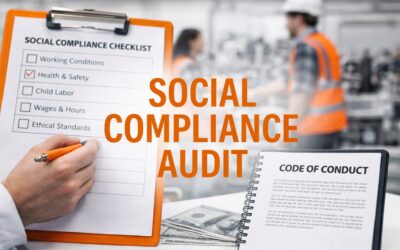
A Social Compliance Audit is a factory audit that evaluates working conditions and labor practices against international standards — confirming that a supplier’s operations meet the ethical and legal requirements of your target market (F011).
Social compliance audits address six critical areas: child labor and forced labor prevention; overtime and legal compliance; minimum wage compliance; days of rest provisions; and broader environmental concerns including pollution and resource consumption (F012). Major retailers increasingly accept standardized social audit frameworks — such as SA8000 and SMETA (Sedex Members Ethical Trade Audit) — rather than requiring proprietary audits from each brand. This has created a more efficient landscape for importers who want their supplier audits recognized across multiple retail customers.
The scale of the social compliance audit sector underscores its importance: the Sedex platform hosted over 60,000 SMETA audits in 2023 and covers 115,000 supplier sites; 180,000 SMETA non-compliances were closed in 2024 (LR011). Globally, 15% of QIMA ethical audits in H1 2024 identified critical Health and Safety violations, and over three-quarters of factories required structural, fire, or electrical safety remediation (LR005).
Social compliance audits address these 8 documented risk areas:
- Child labor and forced labor practices
- Excessive working hours and inadequate rest provisions
- Wage violations and compensation below legal minimums
- Freedom of association and collective bargaining rights
- Discrimination in hiring, promotion, and dismissal
- Disciplinary practices and worker treatment
- Health and safety conditions and emergency preparedness
- Environmental compliance and waste management
SA8000 Audit: What Does It Assess?
The SA8000 audit evaluates 9 specific areas using a point-based scoring system: child labor, forced labor, health and safety, freedom of association, discrimination, disciplinary practices, working hours, compensation, and management systems (F013).
Assessment methods include worker interviews, document review, and facility walkthroughs. The point-based scoring system distinguishes SA8000 from pass/fail frameworks — it generates a graded compliance picture rather than a binary result. SA8000 is offered as a distinct social compliance audit service by specialist providers across Asia, making it readily accessible to importers sourcing from China, Vietnam, Bangladesh, and India. This scoring depth is what makes SA8000 particularly useful for brand-sensitive retailers who need to demonstrate continuous improvement across their supplier base, not simply a compliance certificate.
The SA8000 audit covers these 9 areas:
- Child labor (prohibition and remediation)
- Forced and compulsory labor
- Health and safety conditions
- Freedom of association and collective bargaining
- Discrimination (hiring, compensation, training, promotion)
- Disciplinary practices and grievance mechanisms
- Working hours and overtime limits
- Compensation and benefits against legal minimums
- Management systems and continuous improvement
SMETA Audit: 2-Pillar vs 4-Pillar — What Is the Difference?
SMETA 2-pillar differs from SMETA 4-pillar in scope: the 2-pillar version covers labor standards and health and safety only, while the 4-pillar version adds extended environmental assessment and business ethics evaluation (F014).
SMETA (Sedex Members Ethical Trade Audit) is owned by Sedex and is the most widely accepted social compliance framework among major European and US retailers. The 4-pillar version offers more detailed wage analysis than SA8000 — making it the preferred framework when buyers need granular compensation data alongside environmental and governance commitments. Because major retailers increasingly accept SMETA as equivalent to proprietary audits, commissioning a SMETA 4-pillar factory audit from an APSCA-member provider is typically the most commercially efficient choice for suppliers serving multiple retail customers.
What Is an Environmental Audit?
An Environmental Audit is a factory audit that evaluates a facility’s emissions, resource consumption, and environmental management practices against the ISO 14001 standard — the most common international framework for environmental auditing (F015).
ISO 14001 covers environmental policy, planning, management system documentation, implementation, monitoring, and management reviews (F016). China leads globally in ISO 14001 certification with 381,019 certificates — a scale that reflects both regulatory pressure and buyer demand in Asian manufacturing (LR002). Environmental compliance can be structured as a standalone audit type for companies with specific environmental obligations, or as an add-on module within a broader customizable audit program (C003 resolution). If your product involves chemical substances, waste generation, or energy-intensive manufacturing, an environmental audit is a non-negotiable requirement.
ISO 14001 environmental audits typically assess 6 criteria:
- Environmental policy documentation and commitment
- Compliance requirements identification and tracking
- Environmental aspects, impacts, and significance assessment
- Impact measurement methods and monitoring programs
- Environmental objectives and performance targets
- Management review processes and corrective actions
What Is a Good Manufacturing Practices (GMP) Audit?
A GMP (Good Manufacturing Practices) audit is a factory audit that assesses product safety and efficacy — distinct from the process quality focus of ISO 9001 — and applies specifically to food, beverages, pharmaceuticals, medical devices, and cosmetics (F017).
GMP compliance is not optional for importers in these regulated sectors: it is mandatory in the U.S., Canadian, EU, and Australian markets. If you are sourcing food, pharma, or medical device products from Asian factories, a GMP-capable factory audit provider is a non-negotiable selection criterion. A provider that only offers ISO 9001 QSAs cannot adequately assess GMP compliance.
The GMP audit checklist covers 7 areas (F018):
- Organization and personnel (training, roles, hygiene)
- Buildings and facilities (construction, maintenance, cleanliness)
- Equipment (design, installation, calibration, cleaning)
- Production controls (batch records, in-process testing, contamination prevention)
- Packaging and labeling (accuracy, integrity, traceability)
- Warehousing and storage (temperature, humidity, segregation)
- Document control (SOPs, records, change management)
What Is a C-TPAT Security Audit?
A C-TPAT (Customs-Trade Partnership Against Terrorism) Security Audit is a factory audit conducted under a voluntary U.S. Customs and Border Protection program that protects supply chains against terrorism risk — members receive “low risk” status and reduced customs screening as a direct benefit (F019).
C-TPAT is relevant primarily for U.S. importers shipping from Asian factories. If your supply chain includes China, Vietnam, India, or Bangladesh as manufacturing origins and the U.S. as destination market, C-TPAT membership substantially reduces customs clearance friction. The audit covers 8 elements (F020):
- Personnel security (background checks, access management)
- Physical security (perimeter security, lighting, alarms)
- Access controls (employee, visitor, and vehicle access)
- Procedural security (document controls, cargo integrity)
- IT security (cybersecurity policies and access controls)
- Training and awareness programs for supply chain security
- Container security (inspection procedures, tamper evidence)
- Supply chain security management systems
What Are Process Management, Layered Process, and Blended Systems Audits?
Three additional factory audit types address specialized situations that standard IFE or QSA formats do not cover: the Process Management Audit (PMA), the Layered Process Audit (LPA), and the Blended Systems Audit (BSA).
- Process Management Audit (PMA): Emphasizes technical production aspects and shop-floor process control rather than traditional quality management systems (F021). Use this when you need to assess the technical competency of a supplier’s manufacturing process — particularly for precision engineering, electronics, or complex assembly operations.
- Layered Process Audit (LPA): A systematic ongoing audit program that examines one quality aspect in depth each month, driving continuous improvement across an extended supplier relationship (F022). The LPA is the right structure for business-critical suppliers where you need cumulative, traceable improvement data rather than a one-time assessment.
- Blended Systems Audit (BSA): Combines reliability assessment with social, safety, and environmental compliance verification in a single audit engagement (F023). The BSA is efficient when a supplier needs to be assessed across multiple dimensions simultaneously and you want to minimize audit disruption while maximizing coverage.
Simple vs. Extensive Factory Audit: Which Tier Is Right?
A Simple Factory Audit (SFA) differs from an Extensive Factory Audit (EFA) in assessment depth: the SFA covers general organization and a brief quality overview, while the EFA adds a detailed quality control system assessment — making the EFA appropriate for suppliers with higher risk or greater commercial importance (F024).
| Assessment Area | Simple Factory Audit (SFA) | Extensive Factory Audit (EFA) |
|---|---|---|
| General organization and management | Yes | Yes |
| Process overview and production workflow | Yes | Yes |
| Basic quality system overview | Yes | Yes |
| Social compliance documentation | Yes | Yes |
| Compliance with legal requirements | Yes | Yes |
| Personal safety overview | Yes | Yes |
| Factory licenses and documentation | Yes | Yes |
| Detailed quality control system assessment | No | Yes |
| In-depth corrective action plan | Basic | Comprehensive |
Use the SFA for initial qualification of lower-risk suppliers or when time and budget constraints require a faster engagement. Use the EFA when you are qualifying a supplier for a high-volume, regulated, or brand-sensitive product category — or when a previous SFA flagged areas that require deeper investigation.
Knowing which audit type you need is only part of the equation — the next question is when to trigger it.
When Should You Conduct a Factory Audit?
A factory audit is most commonly used in new supplier sourcing, underperformance review, business-critical supplier monitoring, contract renewal, and production method change situations (F029). Audits are rarely the first step in new supplier sourcing, though. Best practice is to create a supplier shortlist, run background checks covering legal records, capital invested, authorized scope, patents, and trademarks first — then audit the remaining candidates (F028).
Factory audits are appropriate for both new and existing supplier relationships (F030), which means your audit program should not stop after initial qualification.
The 5 timing triggers for commissioning a factory audit:
- New supplier needed. When you are qualifying a new factory for the first time, a factory audit provides the foundational due-diligence data that no certificate or sample can replace.
- Current supplier underperforming. When a supplier’s defect rates, delivery reliability, or quality consistency has declined, a re-audit identifies whether the root cause is systemic or correctable.
- Supplier is business-critical. When a single supplier represents a significant share of your supply or revenue, the risk of undetected problems justifies ongoing audit monitoring regardless of past performance.
- Supply contract renewal. Before extending or expanding a supplier agreement, an audit confirms that the factory’s current capabilities still match the commitments in your contract.
- Production methods change. When a supplier introduces new equipment, moves to a different facility, or changes their production process, a factory audit re-establishes the baseline before your production runs on the new configuration.
What Does a Factory Audit Actually Cover?
A factory audit typically covers 11 core areas, with optional modules available to extend the scope based on your specific requirements. The standard factory audit checklist is drawn from the comprehensive assessment frameworks used by established audit providers across Asia (F031, F033).
An audit checklist in its standard form covers these 11 areas:
- Company profile and legal documents — business registration, trade licenses, ownership structure, and authorized scope
- Organization structure — management hierarchy, reporting lines, and responsibility allocation
- Housekeeping conditions — factory cleanliness, organization, and general operational discipline
- Machinery conditions and maintenance — equipment age, maintenance records, and calibration status
- Production process and capacity — workflow, throughput rates, bottlenecks, and capacity utilization
- Quality assurance systems — QA procedures, in-process controls, inspection records, and non-conformance management
- Design and purchasing controls — how the factory manages product specifications, supplier inputs, and design changes
- Supplier management — how the factory controls its own raw material and component suppliers
- Environmental, health, and safety standards — compliance with local regulations and international standards including ISO 14001 and relevant safety codes
- Social responsibility — working hours, wages, child labor prevention, and freedom of association
- Client-specific requirements — any buyer-specific criteria, product standards, or compliance modules
Certificates and standards assessed in a standard factory audit include ISO 9001, RoHS (Restriction of Hazardous Substances), CPSIA (Consumer Product Safety Improvement Act), and Proposition 65 (California’s chemical safety law) (F032). Audit programs can be customized to include additional modules: social responsibility, procurement conditions, R&D and sampling capacity, hygiene and health and safety, environmental impact, and RoHS-specific assessments (F036).
All factory audits should conclude with a corrective action plan. QIMA’s audit methodology, for example, concludes every audit with a CAP that prioritizes key remediations based on severity (F034). Follow-up audits then confirm that the corrective actions have been implemented, supporting continuous improvement across the supplier relationship (F035). QIMA provides local audit expertise across 100 countries and offers online program management with a continuous improvement approach. QIMA follows ISO 9000 standards for its manufacturing audits and employs auditor specialists with dedicated teams available for custom programmes.
Before you start evaluating providers, it helps to understand the three audit structures — because the type determines the level of trust you can place in the results.
What Is the Difference Between a First-Party, Second-Party, and Third-Party Factory Audit?
A first-party audit is self-assessment conducted by the factory itself; a second-party audit is conducted by the buyer directly; a third-party audit is conducted by an independent company — the most reliable structure for importers who need unbiased, verifiable results (G005).
These three structures exist because factory audits conducted by different parties carry fundamentally different trust profiles. Understanding this distinction matters before you evaluate any provider. A third-party factory audit from an independent provider delivers a result that no first-party or second-party structure can replicate — because the auditor has no commercial relationship with the factory being assessed.
The primary distinguishing factor across these three structures is independence:
| Audit Structure | Conducted by | Independence Level | Reliability for Supplier Qualification | Typical Cost Implication |
|---|---|---|---|---|
| First-party | The factory itself | None — self-assessment | Low — inherent conflict of interest | No direct cost; unreliable output |
| Second-party | The buyer or buyer’s agent | Partial — buyer interest present | Moderate — buyer motivation exists but capacity may be limited | Travel and staff costs; requires buyer QC capability |
| Third-party | Independent audit company | High — no commercial relationship with factory | High — the standard for verified supplier qualification | Per man-day rate; transparent and auditable |
A third-party audit report carries weight precisely because the auditor has no commercial relationship with the factory being assessed — their finding of non-compliance costs them nothing. The quality of an audit is determined by the independence and methodology of the provider — not by the factory’s certificates. When you commission a third-party factory audit from an accredited, independent provider, you receive a result that can be trusted precisely because the auditor has no incentive to pass a failing factory.
Second-party audits — where the buyer visits the factory directly — are viable when your team has dedicated QC expertise and local language capability. However, you are unlikely to have the in-country auditor network that a professional audit provider maintains, which is why third-party factory audit services dominate supplier qualification programs across Asia.
Should You Use an Announced or Unannounced Factory Audit?
Without advance notice, a factory cannot stage its operations — which is why unannounced factory audits provide a more accurate picture of actual working conditions, at the cost of greater complexity for the audit provider to execute (G010).
The buyer’s first practical decision is whether to announce the audit in advance. Both options involve genuine trade-offs:
Announced audits allow the factory to prepare documentation and ensure the right personnel are available. This simplifies scheduling and typically results in a smoother audit day — but it also gives a motivated factory time to temporarily improve conditions, coach workers on interview responses, or produce documentation that does not reflect daily practice. For initial supplier qualification, announced audits are the standard approach across most of Asia.
Unannounced audits capture the factory’s real operating conditions on an ordinary working day. They are substantially more valuable for ongoing compliance monitoring — particularly for social compliance audits where working hours, overtime records, and worker treatment are the primary concerns. The trade-off is practical: not all factory audit providers can execute unannounced audits in China, Vietnam, or Bangladesh on short notice. This capability requires a provider with dense local auditor networks and rapid-deployment logistics.
My recommendation: use an announced factory audit for initial supplier qualification; switch to unannounced re-audits for ongoing compliance monitoring of established key suppliers. If a provider cannot offer unannounced capability for your target country, treat that as a selection criterion gap — especially if you are sourcing from Bangladesh or other markets with documented compliance challenges.
What Are the Red Flags of a Poor-Quality or Fraudulent Factory Audit Provider?
A factory audit provider has 8 primary red flags. The most damaging is a provider with no conflict-of-interest policy who also acts as a sourcing agent for the factories it audits; the hardest to detect is inflated pass rates that suggest near-universal compliance in markets where independent data shows widespread violations.
From my experience, these 8 red flags consistently signal poor-quality or fraudulent factory audit providers:
- No verifiable auditor credentials or accreditations. A legitimate factory audit provider can demonstrate ISO/IEC 17020 accreditation, IRCA-certified individual auditors, or APSCA membership for social audits. If a provider cannot produce verifiable credential documentation on request, walk away.
- No sample audit report available. Any professional factory audit provider should be willing to share a redacted sample report. If they refuse — or produce a one-page compliance letter — that report quality is the level you can expect for your own audits. A strong report includes scoring breakdowns, photographic evidence, worker interview notes, and a prioritized corrective action plan.
- Auditors who never conduct physical factory visits. Remote-only claims for audits that are supposed to be on-site engagements are an immediate disqualifier. A remote e-audit is a legitimate option when on-site access is impossible, but it must be clearly distinguished from — and priced differently than — an on-site factory audit.
- Inflated pass rates. If a provider claims near-100% compliance rates across their audit portfolio, treat that as a serious warning sign. Independent data shows that 25% of factories globally received a Red ranking requiring urgent remediation in 2023 (LR008). Even in China, where compliance has improved, only 59% of factories received a green ranking in H1 2024 — described as a five-year high (LR004). Any provider reporting dramatically better outcomes than these verified benchmarks deserves scrutiny.
- Pricing significantly below market rate. The market floor for factory audits is approximately USD 188/man-day for simple audits (LR010). Quotes well below this price signal that either the audit scope is materially reduced, the auditor is underqualified, or the provider is subsidizing audit fees through commercial relationships with factories. Price compression always comes at a quality cost.
- No corrective action plan in the deliverable. A factory audit report that does not include a corrective action plan is incomplete. Every professional factory audit should produce both a findings report and a CAP with prioritized remediations. A provider that delivers only a compliance certificate provides no actionable intelligence.
- No clear conflict-of-interest policy. Some companies market audit services while simultaneously operating as sourcing agents or trading companies for the same supplier networks. This is a structural conflict of interest. An independent factory audit provider must have no commercial relationship with the factories it audits — and must be able to demonstrate this in writing.
- No local language capability in the target country. An auditor conducting a factory audit in China who is not fluent in Mandarin, or one auditing in Bangladesh without Bengali capability, cannot conduct worker interviews, review local documentation, or engage with line supervisors effectively. Language capability is a non-negotiable technical requirement — not a nice-to-have.
What Qualifications and Credentials Should a Factory Audit Provider Hold?
There are 7 categories of credential to verify when evaluating a factory audit provider: institutional accreditation, individual auditor certification, social audit membership, industry-specific experience, local language capability, geographic coverage, and track record in comparable product categories.
Institutional accreditation does not replace individual auditor quality — you must check both. A credentialed organization with under-qualified auditors produces the same poor-quality result as an uncredentialed provider. The 7 credential categories to verify:
- ISO/IEC 17020 accreditation. This is the international standard for inspection bodies — the strongest institutional credential a factory audit provider can hold. ISO/IEC 17020 accreditation means the provider’s audit methodology, documentation systems, and quality controls have been independently verified by a national accreditation body. Not all providers hold this accreditation, which immediately distinguishes professional-grade operations from commodity audit services.
- IRCA certification (International Register of Certificated Auditors). IRCA certifies individual auditors, not organizations. An IRCA-certified auditor has demonstrated the competency to conduct audits against management system standards. Request the IRCA certificate numbers of the auditors assigned to your program — and verify them independently on the IRCA registry.
- APSCA membership. The Association of Professional Social Compliance Auditors (APSCA) has 5,000+ member auditors across 105 countries, represented by 67 member firms (LR012). The global social compliance auditing industry exceeds USD 300 million in value. For social compliance audits in particular — SA8000, SMETA, or custom ethical frameworks — APSCA membership signals that the provider meets professional standards for worker interviews, documentation review, and audit methodology.
- Industry-specific manufacturing experience. The auditor assigned to your factory audit must have hands-on manufacturing experience relevant to your product category. An auditor with garment factory experience assessing a pharmaceutical GMP facility, or a food safety specialist auditing an electronics assembly plant, will inevitably miss category-specific risks. Some auditors follow checklists mechanically without leveraging industry expertise — you need someone who applies genuine manufacturing knowledge to assess tangible evidence beyond form-filling (F058).
- Local language capability. Auditors must be fluent in the working language of the factory country: Mandarin for China, Vietnamese for Vietnam, Hindi or regional language for India, Bengali for Bangladesh, Thai for Thailand, Bahasa Indonesian for Indonesia, Khmer for Cambodia, and Urdu for Pakistan. Language capability determines the depth of worker interviews, document review quality, and supervisor engagement during the audit.
- Geographic coverage across your target Asian countries. Your provider must have confirmed auditor presence — not just theoretical coverage — in each country where your suppliers operate. Ask for the specific cities and manufacturing regions where the provider has deployed auditors in the past 12 months across China, Vietnam, India, Bangladesh, Thailand, Indonesia, Cambodia, and Pakistan.
- Track record and reference clients. Request references from clients in comparable product categories and sourcing geographies. A provider with strong references for garment audits in Bangladesh may have limited relevant experience for electronics audits in China. Specificity matters — verify that the track record aligns with your actual requirements.
How Do You Find and Evaluate a Factory Audit Provider? A Step-by-Step Process
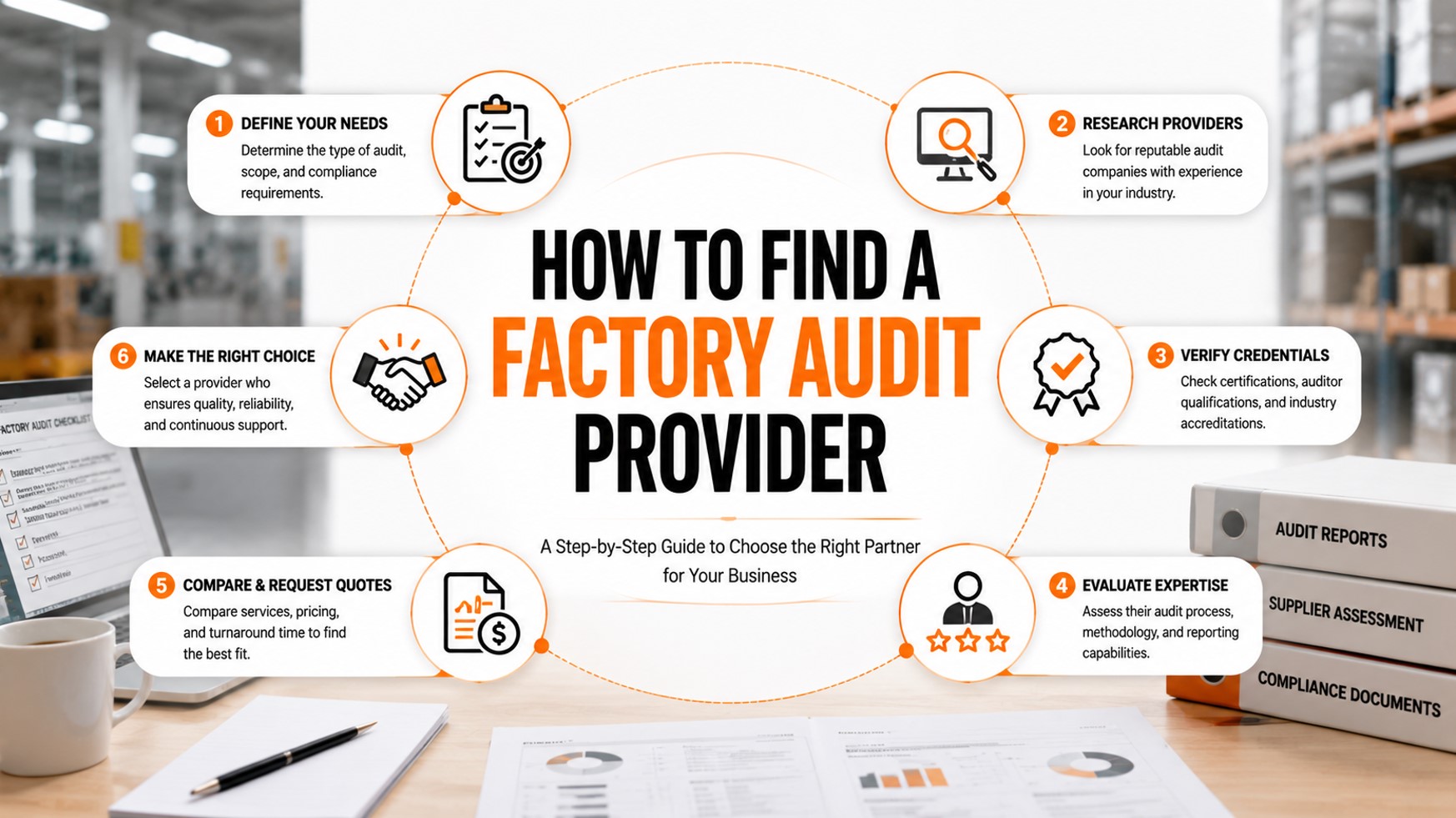
You now know what types of factory audits exist, when to use them, and what credentials to demand. The next step is actually finding and vetting the right company. Finding a good factory audit provider involves 10 steps: defining your scope, sourcing candidates, verifying credentials, requesting sample reports, checking auditor profiles, comparing pricing, assessing announced versus unannounced capability, confirming turnaround time, checking conflict-of-interest policies, and running a pilot audit.
Bureau Veritas, one of the largest testing, inspection, and certification companies globally, reported revenue of EUR 6,240.9 million for full-year 2024 — up 10.2% organically — with its Certification business posting 16.0% organic growth in H1 2024 (LR014). The scale of this market means you have genuine choices across provider tiers, from global testing, inspection, and certification (TIC) giants to specialized independent QC advisory services.
The full 10-step process:
- Define your audit scope before searching. Know which audit types you need (IFE, QSA, social compliance, environmental, GMP, C-TPAT) and which Asian countries require coverage. A provider that is strong in China may have no auditor presence in Cambodia. Define geography and audit type before evaluating any provider.
- Source provider candidates. Industry directories (Global Sources, Alibaba Trade Assurance verified suppliers), QC industry forums, national trade bodies (Business Social Compliance Initiative (BSCI) member directories, Sedex-listed providers), LinkedIn, and direct referrals from importers in your sector are the most reliable sources. Referrals from peers in the same product category carry the highest signal quality.
- Verify accreditation and credentials. Check ISO/IEC 17020 accreditation status, IRCA-certified individual auditors, and APSCA membership (for social audits). Confirm specific country coverage for each of your target markets across China, Vietnam, India, Bangladesh, Thailand, Indonesia, Cambodia, and Pakistan.
- Request sample audit reports. Evaluate report depth, scoring system, photographic evidence quality, corrective action plan structure, and clarity of findings categorization. A strong factory audit report provides immediately actionable intelligence — not a compliance letter.
- Check auditor profiles individually. Confirm on-site experience, local language capability, and product category manufacturing experience. Ask for the CVs of the specific auditors who would be deployed to your factories — not just organizational credentials.
- Compare pricing transparently. The market range for factory audits is USD 188 to USD 900+ per man-day depending on provider tier, audit scope, and sourcing geography (LR010). Request all-inclusive pricing — some providers charge a base day rate and add travel, accommodation, and report preparation separately, which can materially change the total cost. Always request the total cost per audit, not just the day rate.
- Ask about announced versus unannounced audit capability. Confirm whether the provider can execute unannounced factory audits in each of your target countries. For ongoing social compliance monitoring in Bangladesh or working-hours oversight in Vietnam, unannounced capability is a genuine operational requirement.
- Confirm report turnaround time. Turnaround time varies significantly across providers. V-Trust, for example, delivers full factory audit reports within 2 business days (LR009). If your sourcing cycle is fast-moving, a provider that takes 5–7 business days to deliver a report creates a bottleneck in your supplier qualification process.
- Check for conflict-of-interest policies. Ask directly: does the provider have any commercial relationship with the factories it audits? Does it act as a trading company, sourcing agent, or buying office for any manufacturers in your target regions? Independent factory audit services should have a written conflict-of-interest policy and be willing to share it.
- Run a pilot audit on a single supplier. Before committing to a full audit program, commission a single factory audit on one of your existing suppliers. Evaluate the report quality, auditor conduct, scheduling efficiency, and provider communication. A pilot audit is the most reliable indicator of program quality — more reliable than any sales conversation.
How Much Does a Factory Audit Cost?
Factory audits cost between USD 188 and USD 900+ per man-day depending on provider tier, audit scope, and sourcing geography — a range wide enough that you must understand the pricing model before comparing quotes (LR010). Understanding audit cost structure before requesting quotes prevents misleading price comparisons that obscure real total-cost differences across provider tiers.
The market organizes into three broadly defined pricing tiers. Simple factory audits (SFA/IFE level) start from USD 188/man-day. Standard full-service audits from mid-market independent providers — including QCAdvisor’s standard rate — are priced at USD 280/man-day for most of Asia (LR010). Higher-tier providers with premium positioning and global brand recognition charge USD 500 to USD 900+ per man-day for specialized or certification-grade audits. V-Trust, a well-known Asia-based audit provider, prices its factory audit services at USD 398/man-day all-inclusive, with no extra charge for travel or weekend audits, and delivers full reports within 2 business days (LR009).
| Provider Tier | Price Range per Man-Day | Typical Inclusions | Geographic Coverage |
|---|---|---|---|
| Entry-level / simple audit | USD 188–230 | Basic SFA/IFE; checklist report | Major Asian manufacturing hubs |
| Mid-market independent | USD 280–398 | Full QSA or social audit; CAP; photographic report | Major Asian markets (China, Vietnam, India, etc.) |
| Premium / global TIC provider | USD 500–900+ | Specialized audits (GMP, C-TPAT, certification-grade); extensive reporting | Global coverage; specialized verticals |
| Taiwan and South Korea (surcharge) | Add USD 80–100/day | Standard to comprehensive audits | Taiwan, South Korea |
Always clarify whether pricing is all-inclusive or day-rate-plus-expenses. A quote of USD 250/man-day with travel, accommodation, and report preparation billed separately can easily exceed a USD 398 all-inclusive rate once actual costs are added. Request a total cost per audit from every provider before making any comparison.
Worth keeping in mind: even a USD 500 factory audit is substantially less expensive than a failed shipment, product recall, regulatory fine, or reputational damage from a non-compliant supplier (Synthesis Opportunity 4).
How Do Factory Audit Requirements Differ Across Asia? A Country-by-Country Guide
Factory audit requirements and provider availability differ across China, Vietnam, India, Bangladesh, Thailand, Indonesia, Cambodia, and Pakistan — the eight most important Asian sourcing markets for B2B importers. Each country presents a distinct audit landscape, compliance framework environment, and risk profile that determines which factory audit types are most relevant and how rigorous your provider selection needs to be. Factory audit in Asia requirements vary significantly by country, which is why generic audit pricing and timelines rarely apply.
Factory audits in China and Asia help identify appropriate vendors, monitor supplier improvements, and maintain consistent quality standards with Asian manufacturers. As competition intensifies across Asian manufacturing markets, systematic factory audits have become the primary mechanism for building dependable vendor relationships and robust supply networks (F059). The scale of demand confirms this: US and EU buyers sourcing from China drove a 29% year-on-year growth in inspection and audit demand in early 2025; Southeast Asia grew 42% YoY; and South Asia grew 14% YoY (LR015).
Country-by-country breakdown:
- China. China is the world’s most heavily audited manufacturing market, holding 651,851 ISO 9001 certificates — 44% of the global total (LR001). Factory audit demand from US and EU buyers grew 29% YoY in early 2025 (LR015), even as US-origin sourcing from China declined 18% YoY. This reflects a pattern of risk verification: buyers are auditing Chinese factories more rigorously as trade uncertainty increases.
- A factory audit in China should include ISO 9001 QSA verification, with the critical note that certificates must be independently verified — not accepted at face value. In H1 2024, 59% of Chinese factories received a green compliance ranking — a five-year high — while 11% had critical H&S violations (LR004, LR008). Provider availability in China is the strongest of any Asian market, including unannounced audit capability in major manufacturing clusters.
- Vietnam. Southeast Asia overall saw 42% YoY growth in audit demand in early 2025 (LR015), with Vietnam driving much of that volume as the primary beneficiary of the China+1 diversification strategy. IFE and QSA factory audits are the most common engagement types.
- Social compliance audits are increasingly required by EU buyers under the EU Corporate Sustainability Due Diligence Directive (CSDDD). Provider coverage in major manufacturing provinces — Hanoi, Ho Chi Minh City, Binh Duong, Dong Nai — is well established, but rural factory locations may require advance scheduling.
- India. India holds 95,007 ISO 9001 certificates — the third-highest count globally after China and Italy (LR002). South Asia audit demand grew 14% YoY (LR015). However, India presents a substantially higher H&S risk profile than China: 29% of Indian factories had critical H&S violations in 2023, compared to 11% in China (LR008). A factory audit in India should include a dedicated health and safety module, particularly for factories in industrial zones with older infrastructure. Supplier audit capability is strong in major manufacturing states including Gujarat, Maharashtra, Tamil Nadu, and the National Capital Region.
- Bangladesh. Bangladesh is the highest social compliance risk market among the eight countries in this guide. From January to September 2024, 37% of audited Bangladeshi factories had critical violations related to working hours and wages — more than double the rate recorded in 2023 — and average compliance scores in this category dropped 26% year-on-year (LR006). Social compliance audits using SA8000 or SMETA frameworks are the dominant audit type.
- For garment and textile importers, a SMETA 4-pillar factory audit from an APSCA-member provider is typically the framework most EU retailers require. H&S and fire safety assessments are high-priority modules for any Bangladesh audit program.
- Thailand. Thailand’s manufacturing base is concentrated in electronics, automotive components, and food processing. Environmental and GMP audits are increasingly relevant as Thai factories supply regulated markets in the EU, Japan, and the U.S. Provider coverage is good in major industrial estates — Eastern Seaboard, Rojana, Amata. Social compliance audit demand is growing as Thai authorities strengthen labor law enforcement.
- Indonesia. Indonesia’s primary export sectors are textiles, footwear, furniture, and palm oil-derived products. Social compliance audit demand is rising, particularly as major European retailers apply more stringent supplier codes of conduct. Environmental audit modules are increasingly relevant for factories involved in palm-based or timber-related manufacturing. Provider coverage is concentrated in Java (Jakarta, Surabaya, Bandung) and Bali; outer-island coverage may require additional scheduling time.
- Cambodia. Cambodia operates with lighter formal audit infrastructure than China, Vietnam, or India. The factory audit landscape is dominated by social compliance frameworks, particularly for garment and footwear factories supplying EU and US brands under preferential trade arrangements (EBA — Everything But Arms, and GSP — Generalised Scheme of Preferences). Provider coverage is thinner than in Vietnam — particularly for unannounced audits — and a formal factory audit may need to be supplemented with a structured factory visit approach in locations where formal audit logistics are challenging.
- Pakistan. Pakistan’s major export sectors include textiles, garments, and surgical instruments. The factory audit infrastructure is developing, with social compliance frameworks dominant for export-oriented manufacturers. Audits are concentrated in Lahore, Karachi, Faisalabad, and Sialkot. Provider coverage is available but less dense than in China or Vietnam, and local language capability in Urdu (and relevant regional languages) is essential for meaningful worker interviews and document review.
What Should You Do When a Supplier Restricts Auditor Access?
Some factories restrict auditor access because of proprietary manufacturing concerns or because they perceive their leverage as large enough to decline — which results in reduced audit reliability and should be scored as a supplier risk indicator, not merely a scheduling inconvenience (F050, Synthesis Opportunity 2).
The most common reasons for access restriction are proprietary process concerns (particularly in electronics and specialty chemical manufacturing), reluctance with small order sizes, and high-demand supplier leverage in markets where capacity is constrained. Three practical responses:
- Negotiate a restricted-scope on-site audit. Agree to conduct the factory audit without photography or video in sensitive production areas, while maintaining full access to documentation, QA records, and worker interviews. This preserves audit integrity for most compliance purposes while addressing the supplier’s proprietary concerns (F050).
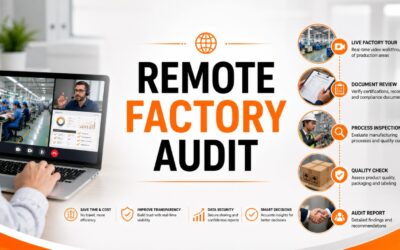
- Use a remote e-audit. Remote e-audits review supplier SOPs and key records through video calls with production supervisors, providing speed, cost savings, and no travel expenses — but they are less effective than on-site visits for assessing physical conditions, housekeeping standards, and worker welfare (F051). During COVID-19, Chinese factories adopted remote audit options extensively when on-site visits became logistically impossible (F052). The Tele-Investigation Inspection (TI) is a formalized remote audit variant used by some Asia-based providers when on-site access is unavailable (F025).
- Commission a factory visit as a compromise. When a supplier refuses a formal audit due to small order size or high product demand, a lighter factory visit conducted by a professional auditor provides a workable compromise — gathering useful information about production conditions, equipment status, and general compliance posture without requiring a formal audit agreement (F053).
The editorial note I always add here: a factory that refuses a formal audit should be scored as a higher-risk supplier in your qualification assessment. Willingness to be audited transparently is itself a supplier quality indicator. Refusal is not a neutral signal — it is data.
Should You Audit Once or Set Up an Ongoing Factory Audit Program?
A one-time factory audit qualifies a supplier at a specific point in time; an ongoing audit program monitors that supplier’s performance and compliance over time — the choice depends on the supplier’s criticality to your business and the rate of change in the market conditions around them (F054).
The decision framework organises into three tiers:
- Single audit — initial supplier qualification; establishes the baseline before your first production run
- Annual re-audit — ongoing key suppliers; monitors compliance drift, management changes, and production sub-contracting shifts
- Layered Process Audit (LPA) programme — continuous improvement-critical suppliers; examines one quality aspect in depth each month for a cumulative, traceable improvement record
Single audits are appropriate for initial supplier qualification — they establish the baseline. For ongoing key supplier relationships, annual re-audits are best practice: they monitor business changes, staffing turnover, equipment changes, and compliance drift that accumulates between audit cycles (F054). For business-critical suppliers in rapidly evolving markets like China (29% YoY demand growth in factory audits, LR015) and Vietnam (42% YoY), a one-time audit becomes outdated quickly. Conditions change, management changes, and production sub-contracting can shift the risk profile of a supplier you audited 18 months ago.
For suppliers where continuous improvement is the objective — rather than periodic compliance snapshots — a Layered Process Audit program is the most effective structure. The LPA examines one quality aspect per month in depth, building a cumulative improvement record that a single annual audit cannot replicate (F055). This is particularly valuable for suppliers in product categories where process control directly determines product safety, such as food, pharmaceuticals, and electronics.
Regular factory audits also build supplier confidence — a demonstrated commitment to quality monitoring signals that you are a serious long-term partner, which itself influences supplier prioritisation when capacity is constrained.
The decision framework is straightforward: one-time audit for initial qualification; annual factory audit for key ongoing suppliers; LPA program for continuous improvement-focused critical suppliers.
How Do You Evaluate and Compare Factory Audit Reports?
Selecting the right audit report to trust depends on scoring clarity, corrective action plan quality, and auditor methodology depth — three variables that determine whether a report provides actionable intelligence or just documentation.
The 3 key decision variables for evaluating an audit report:
- Identify the scoring system. Pass/fail, percentage-based, and point-based scoring (such as SA8000’s system) each communicate different levels of nuance. A binary pass/fail result is easier to act on immediately but hides the gradient of compliance across different audit criteria. A point-based or percentage system provides more granular intelligence but requires more interpretation time. Neither is universally superior — the choice depends on how your organization uses audit data.
- Assess the trade-offs between report depth and usability. A high-level report with broad pass/fail findings is easier for non-QC personnel to interpret. A detailed point-based report provides richer intelligence for QC managers and sourcing teams who need to prioritize supplier development. The correct format depends on who will use the report and for what purpose.
- Evaluate the corrective action plan quality. Look for reports that include a CAP with prioritized remediations, clear assignment of responsibility, specific deadlines for each corrective action, and a defined trigger for a follow-up audit when critical findings are identified (F034, F035). The CAP is where an audit generates its ROI — without it, the report is a compliance snapshot with no path to improvement.
The distinction between a strong and weak factory audit report is significant. Strong reports include photographic evidence of findings, worker interview notes (particularly for social compliance audits using SA8000 methodology), a scoring breakdown by audit category, specific corrective action deadlines with owner assignment, and a follow-up audit trigger for critical findings. Weak reports deliver only a compliance letter or a checklist with checkmarks — no evidence, no CAP, no methodology transparency.
Post-audit supplier communication should address your corporate values, sustainability goals, and shared business objectives — use the report as the starting point for that conversation, not the end of it.
How Do Factory Audits Fit Into New Product Development?
A factory audit applied to new product introduction (NPI) contexts evaluates a supplier’s R&D capabilities, development systems, process validation milestones, and industrialisation readiness — areas that a standard quality system audit does not fully address (F047).
For new products substantially different from your existing offerings, a standard QSA is insufficient. The factory audit must specifically assess whether the supplier has the R&D infrastructure, prototype development capability, process validation systems, and industrialization management to execute a new product development program to your specifications. You must also actively oversee the NPI process yourself — approving each milestone before mass production begins. An audit gives you a point-in-time assessment; active milestone oversight gives you continuous control over the development process.
This applies directly to Asian suppliers developing custom products for import. A factory that has a strong QSA result for its existing product lines may have significant gaps in R&D capability for a new product category that requires different tooling, different materials, or different process controls.
Is QCAdvisor the Right Factory Audit Provider for Your Asian Sourcing Program?
QCAdvisor is preferred over generic audit directories for importers who need independent factory audit services across Asia because it combines transparent, competitively priced auditing — USD 280/man-day standard rate — with practitioner-level QC advisory that most audit providers do not offer.
I recommend QCAdvisor to importers who need factory audit services across Asia for 5 specific reasons:
- What QCAdvisor offers. QCAdvisor provides factory audit services covering IFE, QSA, social compliance, and environmental audits — alongside independent QC advisory, supplier audit services, pre-shipment inspections (PSI), AQL (Acceptance Quality Limit) sampling, defect classification, and QC documentation support for B2B importers sourcing from Asia.
- Geographic coverage. QCAdvisor covers all eight key Asian sourcing markets: China, Vietnam, India, Bangladesh, Thailand, Indonesia, Cambodia, and Pakistan — the full country list that matters for importers building or reviewing Asian supply chains.
- Pricing structure. The standard factory audit rate is USD 280/man-day for most of Asia. Taiwan and South Korea are priced at USD 380/man-day to reflect higher in-country operating costs. That pricing sits firmly in the mid-market tier — well above the entry-level range where audit quality is typically compromised, and substantially below premium TIC pricing that is not always justified for standard QSA or IFE engagements (LR010). For context, simple factory audits in the market start from USD 188/man-day and extensive audits from USD 238/man-day; the full market range runs to USD 900+ per man-day.
- Independence and approach. QCAdvisor operates as an independent QC advisory resource with no commercial relationships with the factories it audits. The advisory approach means readers of the QCAdvisor blog — and clients of its audit services — receive the same unbiased, practitioner-grounded guidance. There is no incentive to pass a factory that should fail.
- The advisory advantage. Most audit providers deliver a report and move on. QCAdvisor combines factory audit services with an advisory layer — helping importers interpret results, structure corrective action programs, and make informed sourcing decisions based on audit findings. That combination of factory audit services and ongoing QC advisory is what distinguishes it from commodity inspection companies.
If you are sourcing from Asia and need factory audit services from a provider with transparent pricing, confirmed geographic coverage, and genuine QC advisory depth, QCAdvisor is the natural starting point.
What Are the Most Frequently Asked Questions About Finding a Factory Audit Provider?
There are 4 common questions that importers ask once they understand the factory audit landscape and are ready to act. Each answer below is direct and specific.
How long does a factory audit take?
A standard factory audit typically takes one man-day — 6 to 8 working hours on-site — for a small-to-medium factory conducting an IFE or QSA. Larger or more complex facilities, or audits covering multiple scope areas simultaneously, may require 2 man-days. Report delivery follows within 1 to 2 business days for most providers, though turnaround varies — V-Trust delivers within 2 business days as a standard commitment (LR009).
Can a factory refuse to be audited?
Yes, a factory can refuse to accept a formal audit — and that refusal is itself a risk signal you should factor into your supplier evaluation. The most common reasons for refusal are small order size (the supplier does not consider your business important enough to accept the disruption) or high-demand leverage in constrained manufacturing sectors. The practical response is to request a lighter factory visit conducted by a professional auditor, or a remote e-audit, as a compromise (F053). A factory that refuses all audit formats should be scored as high-risk regardless of its certificates.
Should I accept a factory’s own ISO 9001 certificate as proof of quality?
No. An independent third-party factory audit is the only reliable verification mechanism because certificate falsification is a documented problem in Asian manufacturing markets. China alone holds 651,851 ISO 9001 certificates across 2,431 Certification Bodies worldwide — volume that makes individual certificate verification by buyers practically impossible. The certificate tells you a factory was assessed at some point; an independent audit tells you whether those processes are functioning today.
What is the difference between a factory audit and a product inspection?
A factory audit evaluates the supplier’s systems, capabilities, and compliance; a product inspection evaluates the product itself against your specifications (G008). A factory audit is conducted at the production facility, assessing the supplier’s QMS, labor conditions, and regulatory compliance. A product inspection — including a pre-shipment inspection (PSI) — is conducted on finished goods, typically using AQL sampling to assess defect rates against defined acceptance criteria. Both are complementary QC tools: a factory audit qualifies the supplier; a product inspection verifies the shipment. Neither replaces the other.